Two Decades of Failure and One World War: The Strange Journey of the Zipper
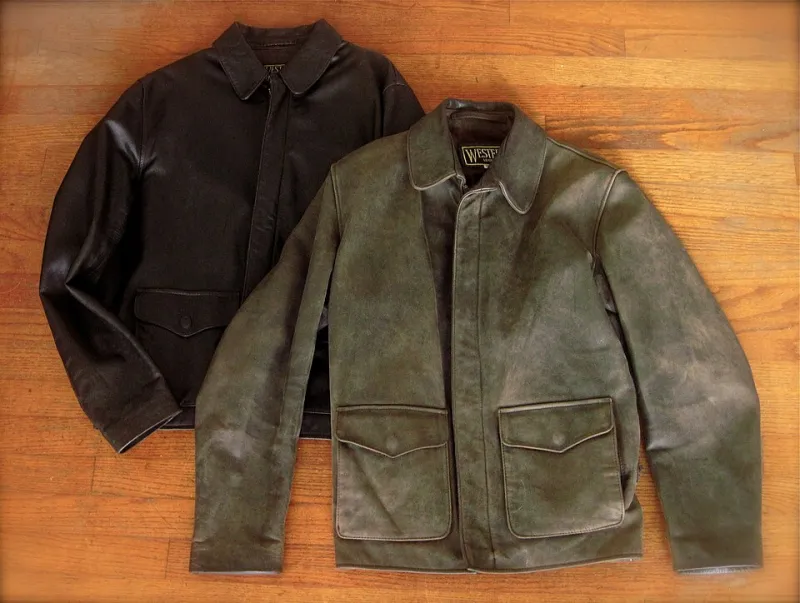
Photo: puuikibeach, CC BY 2.0, via Wikimedia Commons
Look down at your jacket right now. Your jeans. Your bag. The odds are good that somewhere on your body at this exact moment, there's a zipper holding something together. It's so ordinary you don't even register it anymore — just a quick pull and you're done. But that little strip of interlocking teeth nearly never happened at all. For almost twenty years, the device that would eventually replace buttons on half the clothing in America was considered a complicated, unreliable gimmick that nobody wanted.
The backstory of the zipper is really a story about stubbornness, bad timing, and the kind of dumb luck that only seems inevitable in hindsight.
Whitcomb Judson's Big, Clunky Idea
The man who started this whole thing was a Chicago mechanical engineer named Whitcomb Judson. In 1893, he filed a patent for something he called a "clasp locker" — a sliding fastener designed to replace the tedious row of hooks and eyes that held boots closed at the time. Judson was a prolific inventor, the kind of guy who was always solving problems that other people hadn't quite noticed yet. His clasp locker, he was convinced, was going to make getting dressed dramatically easier.
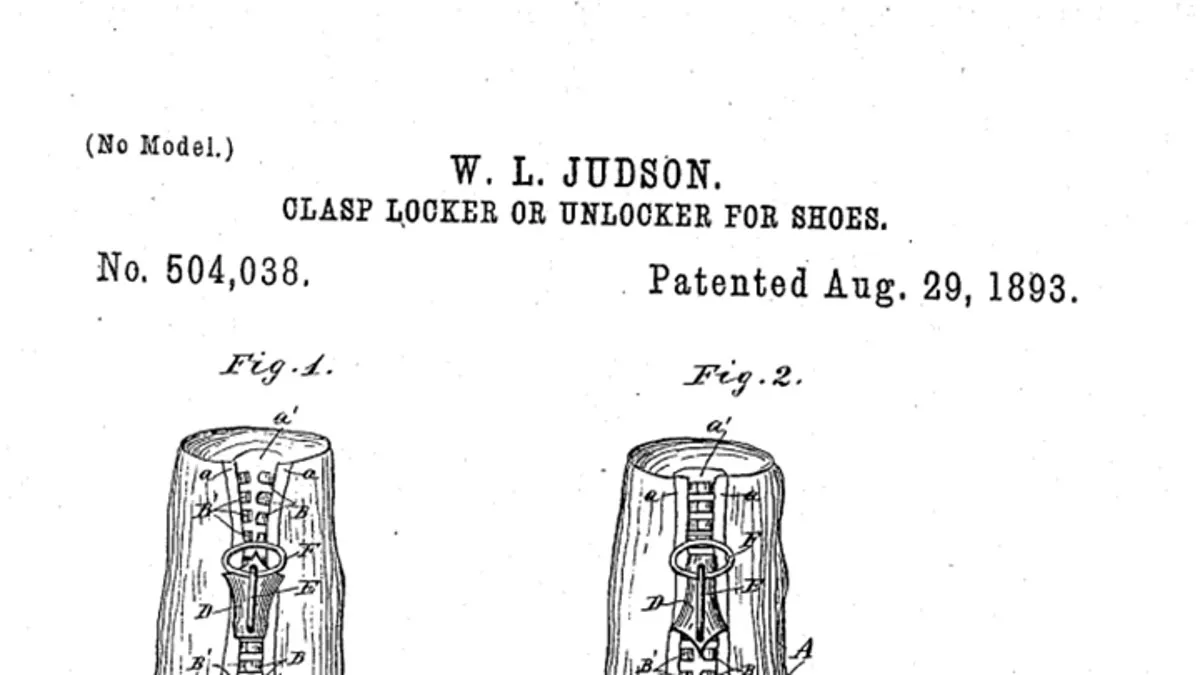 Photo: Whitcomb Judson, via a57.foxnews.com
He debuted it at the 1893 Chicago World's Fair, expecting crowds to be amazed. Instead, he got polite indifference. The device was clunky, prone to popping open at inconvenient moments, and required a level of manufacturing precision that the era's factories couldn't reliably deliver. Orders trickled in — the U.S. Postal Service bought twenty for mail bags — but the fashion industry wasn't interested. Clothing manufacturers looked at Judson's contraption and quietly kept ordering buttons.
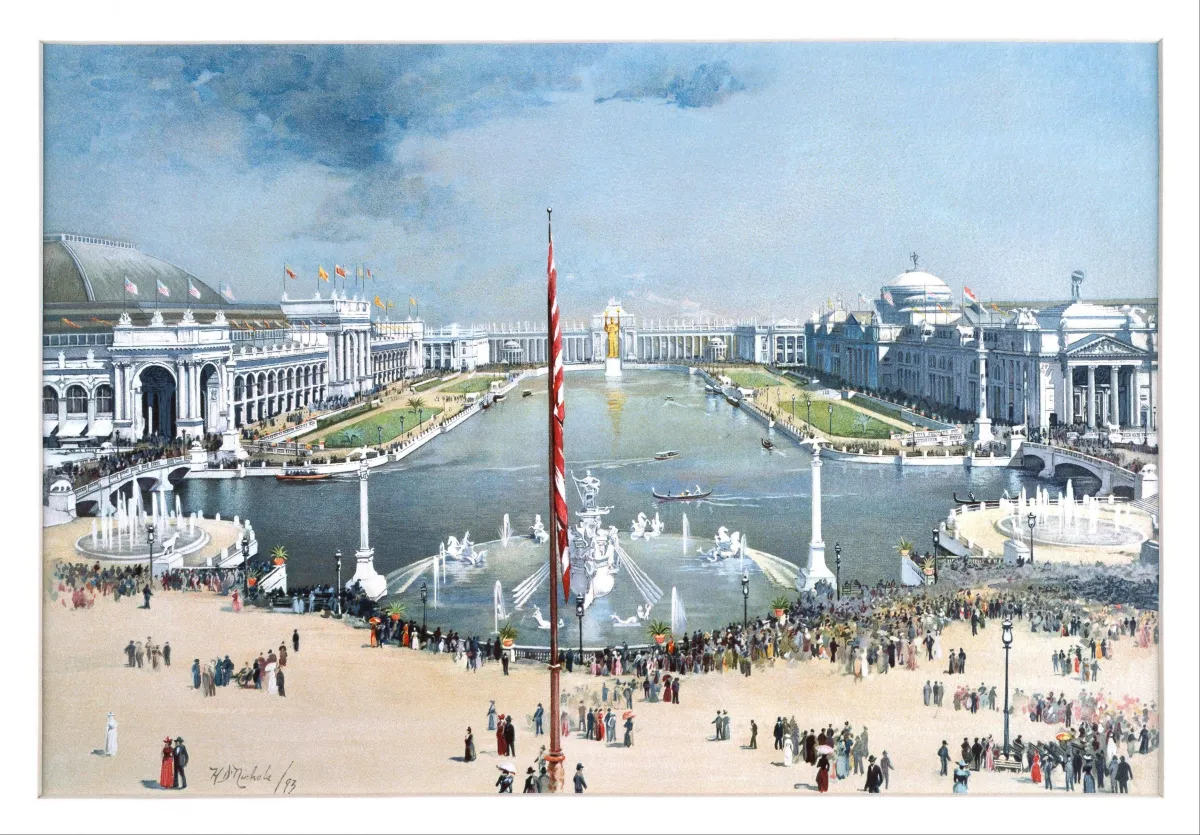 Photo: Chicago World's Fair, via i.pinimg.com
Judson spent the next decade tinkering, filing more patents, and trying to drum up investment. He partnered with a businessman named Colonel Lewis Walker, and together they burned through funding and factory relocations trying to get the design right. By the time Judson died in 1909, his clasp locker had never made it onto a single mass-market garment. It was a fascinating failure.
The Engineer Who Finally Made It Work
The device might have faded into obscurity entirely if a Swedish-born engineer named Gideon Sundback hadn't picked up where Judson left off. Sundback joined the company Walker had built around the patent and became obsessed with solving the core engineering problem: the teeth kept separating when they shouldn't. By 1913, he'd redesigned the mechanism almost from scratch, creating a version with more teeth per inch and a much more reliable interlocking system. His design is essentially what we still use today.
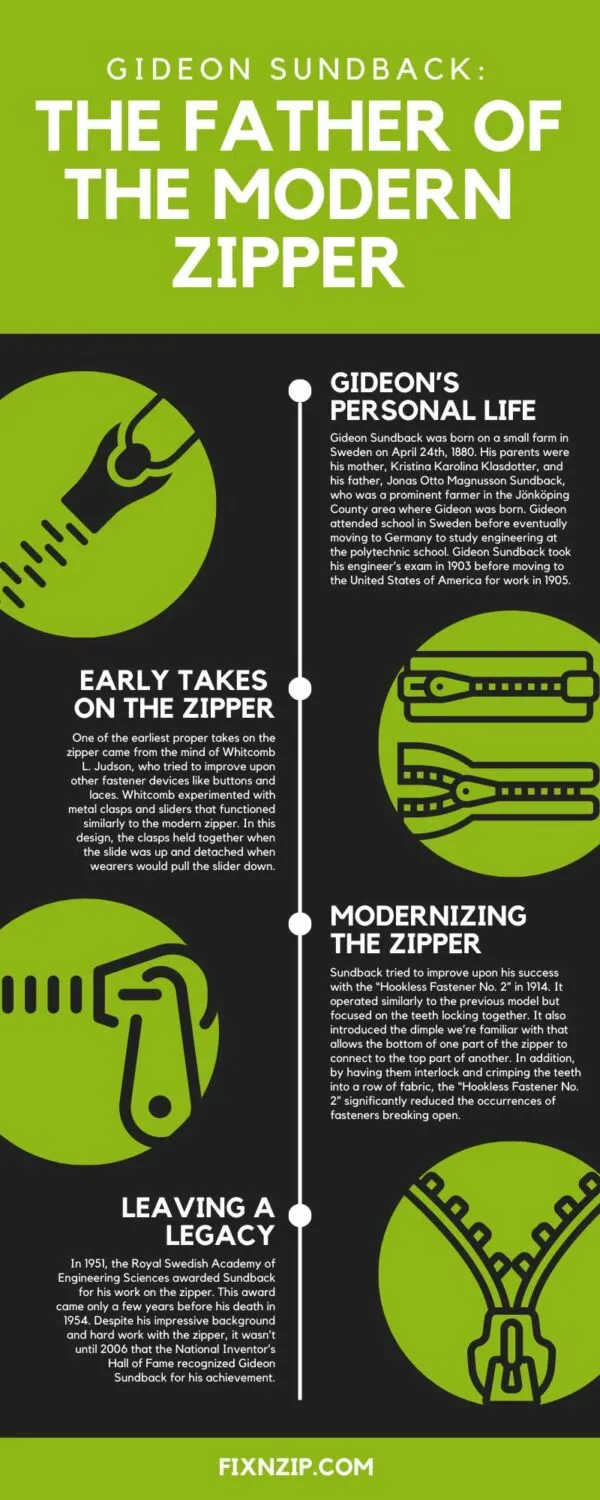 Photo: Gideon Sundback, via www.fixnzip.com
But reliable engineering didn't automatically equal commercial success. Sundback had a working product. What he didn't have was a market that cared.
World War I Changes Everything
The breakthrough came not from fashion but from the military. During World War I, the U.S. Navy began ordering Sundback's fasteners for flying suits and money belts. The military had a straightforward logic: the zipper was faster and more secure than buttons in field conditions, and soldiers didn't care whether it looked elegant. Suddenly the factories were running, the manufacturing process was being refined at scale, and the device was proving itself under real-world pressure.
After the war, the B.F. Goodrich Company — better known for rubber products — licensed the technology for a new line of rubber galoshes. Their marketing team needed a name that would stick, and they landed on something inspired by the sound the fastener made when you pulled it: zip. They called their boots Zippers, and the name immediately clicked with the public in a way that "clasp locker" never could have. Onomatopoeia did what decades of engineering pitches couldn't — it made the thing feel intuitive and fun.
From Boots to Blue Jeans
Once the name existed, the fashion industry finally started paying attention. Through the 1920s and into the 1930s, designers began experimenting with zippers on clothing — first on tobacco pouches and galoshes, then on children's clothes (marketed to parents as tools for teaching kids to dress themselves), and eventually on men's trousers. Esquire magazine ran a famous 1937 feature championing the zipper fly as a major advancement in menswear, somewhat breathlessly arguing it eliminated what the magazine delicately called "the possibility of social embarrassment."
By World War II, zippers were standard issue on military uniforms, and the association with practicality and modernity made them aspirational in civilian clothing. After the war, as American manufacturing shifted back to consumer goods and denim workwear crossed over into mainstream fashion, the zipper came along for the ride.
The Thing Nobody Questioned
What's remarkable about the zipper's story isn't just the long road to acceptance — it's how completely that history disappeared once the product succeeded. Within a generation of becoming common, zippers felt ancient and inevitable, as though clothing had always worked this way. Nobody walked around thinking about Whitcomb Judson's failed World's Fair pitch or Gideon Sundback's obsessive tooth-count calculations.
That's actually how most successful technologies embed themselves into daily life. They fail publicly, get refined quietly, find a side door into the market through some unexpected application, and then — once they're everywhere — become invisible. The zipper didn't conquer fashion through a brilliant launch campaign. It survived long enough, got lucky with a military contract, and found a rubber boot company willing to give it a catchy name.
Next time you zip up your jacket without thinking about it, you're participating in one of the longer, stranger product journeys in American manufacturing history. Twenty years of rejection, one world war, and a sound effect that became a brand. That's the backstory of something you've touched probably a hundred times this week.