The Wartime Accident Inside a Mixing Drum That Became Fast Food's Most Famous Failure
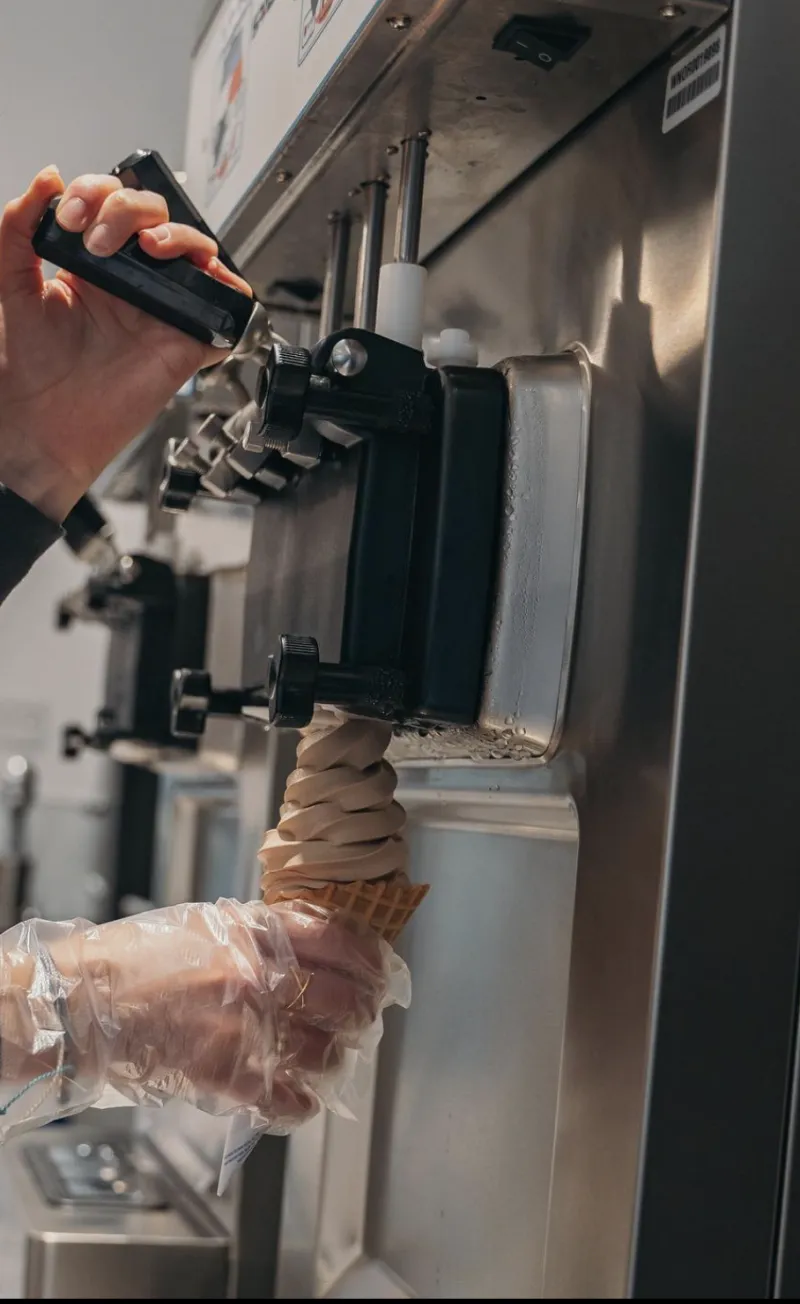
Photo: TexasFoodservice, CC BY-SA 4.0, via Wikimedia Commons
The Wartime Accident Inside a Mixing Drum That Became Fast Food's Most Famous Failure
If you've ever pulled into a McDonald's drive-through and ordered a McFlurry or a soft-serve cone, only to be told — again — that the ice cream machine is broken, you've participated in one of American fast food's most reliable running jokes. The broken McDonald's ice cream machine has its own Twitter following, its own memes, and its own third-party tracking website (mcbroken.com) that monitors which locations have working machines in real time.
But here's what almost nobody knows: the machine that keeps breaking has a stranger origin than the restaurants that house it. Soft-serve ice cream itself — that light, airy, swirled product that's become a fast food staple — wasn't invented by a dessert company or a confectionery entrepreneur. It was discovered by accident in a British military food laboratory during World War II.
And the accident involved too much air.
Stretching Rations in a Laboratory
During the early 1940s, Britain was under severe food rationing. Dairy products were scarce, sugar was controlled, and military food scientists were under constant pressure to find ways to make limited supplies go further. One of the items on the research list was ice cream — a morale product that military brass considered worth maintaining, even in wartime, because it reminded soldiers of home.
The standard ice cream of the era was dense and rich, requiring significant quantities of cream and eggs. Researchers at the Royal Air Force's food science division began experimenting with the mixture, trying to reduce the dairy content without destroying the product entirely.
 Photo: Royal Air Force, via c8.alamy.com
What they discovered — reportedly somewhat by accident during a mixing experiment — was that by injecting more air into the ice cream mixture during the freezing process, you could dramatically increase the volume without adding more ingredients. The resulting product was lighter, softer, and smoother than traditional ice cream. It melted faster and couldn't be scooped in the traditional sense — it had to be extruded through a machine in a continuous soft ribbon.
It was, by the standards of wartime rationing, a small miracle. You could make roughly twice as much product from the same amount of dairy. The RAF began using the technique to produce ice cream for servicemen at lower cost.
The process — overrun, in technical terms, referring to the percentage of air incorporated into the mix — would eventually make its way out of military kitchens and into civilian life. But it needed a delivery system first.
The Roadside Stand That Changed Everything
After the war, soft-serve technology crossed the Atlantic in pieces — some through food industry contacts, some through returning servicemen who'd encountered the product in military settings. In the late 1940s, a few American entrepreneurs began experimenting with soft-serve machines at roadside stands and small ice cream shops.
The most significant early adopter was Tom Carvel, a Greek-American ice cream vendor in New York who had been selling hard ice cream from a truck since the 1930s. Carvel had actually stumbled onto a version of soft-serve semi-independently when a flat tire forced him to sell his melting ice cream stock at a reduced price from a fixed location — and discovered that customers preferred the softer product. He eventually developed his own soft-serve machines and opened what is generally considered the first soft-serve franchise in America.
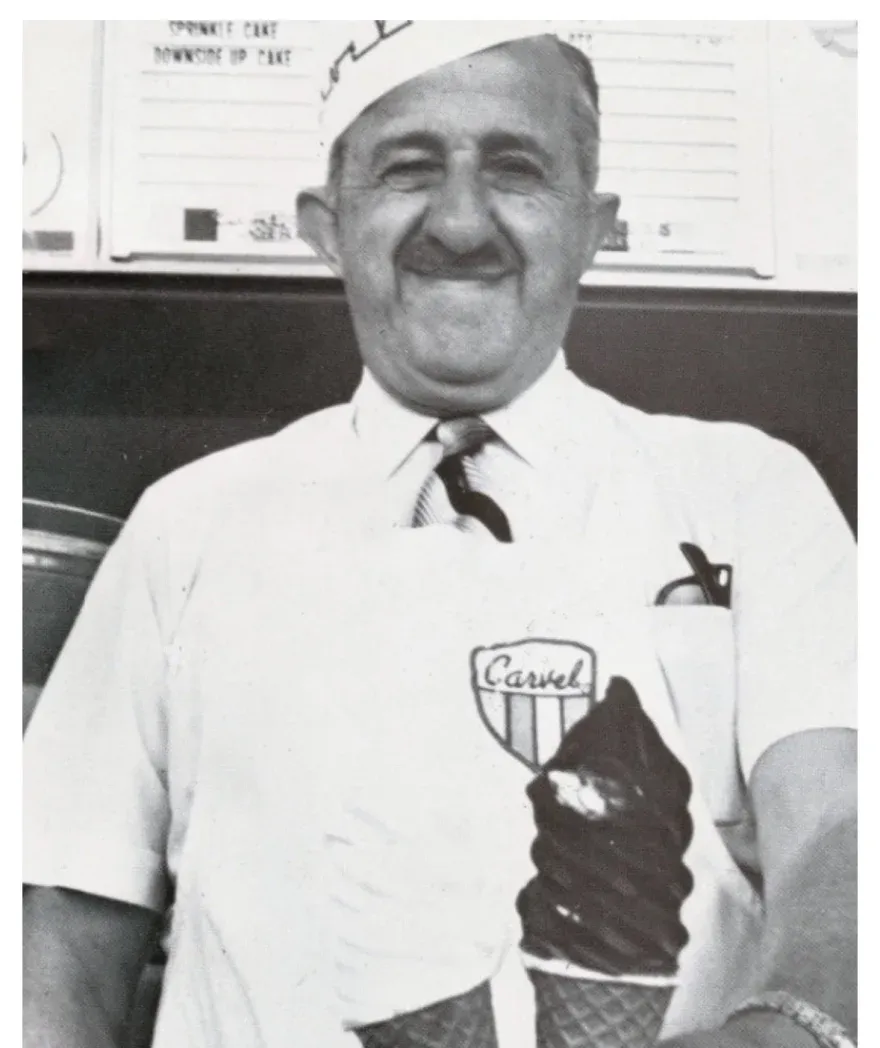 Photo: Tom Carvel, via en.protothema.gr
At roughly the same time, Dairy Queen was scaling rapidly across the Midwest, built almost entirely on soft-serve. The product was cheaper to produce than hard ice cream, required less storage infrastructure, and — critically — customers loved it. The soft swirl became iconic.
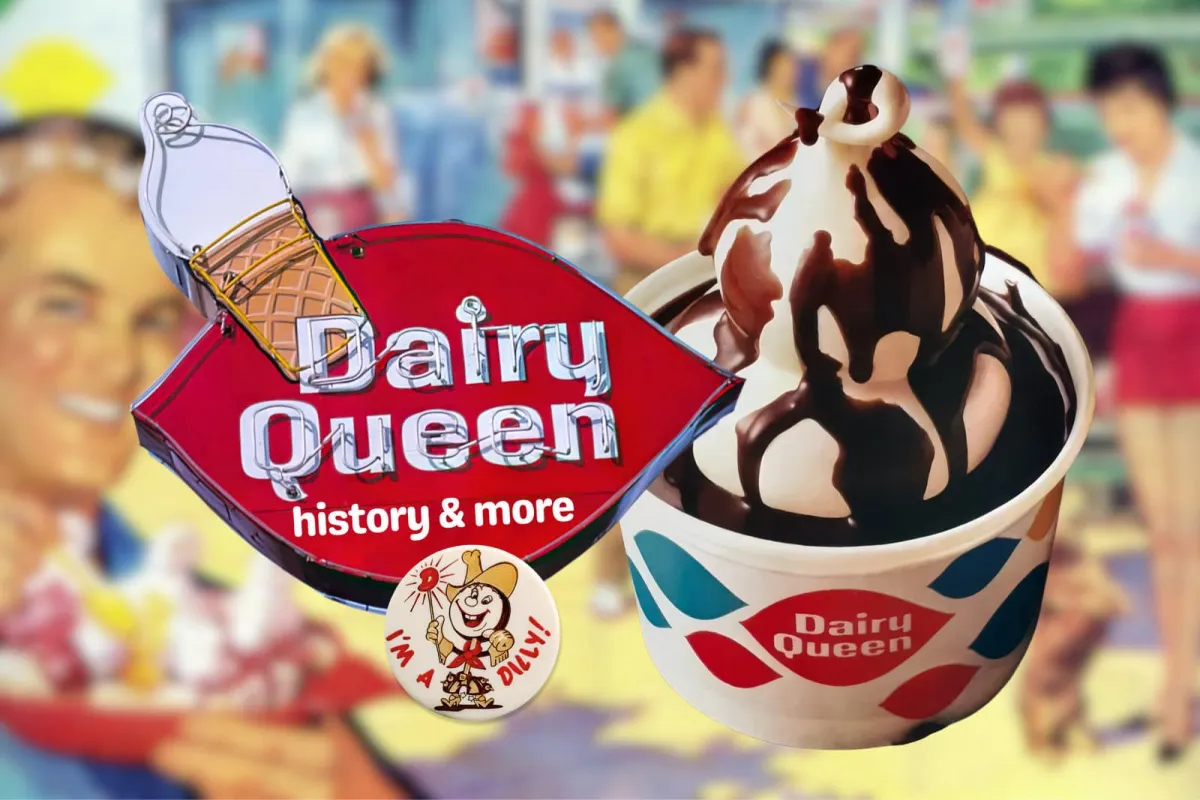 Photo: Dairy Queen, via clickamericana.com
By the early 1950s, soft-serve was everywhere: county fairs, drive-ins, beach boardwalks, and the emerging fast food strips that were beginning to define American roadside culture.
McDonald's and the Machine That Broke the Internet
When McDonald's added soft-serve to its menu in the 1950s and 60s, it was following a trend already well established by Dairy Queen and regional chains. But McDonald's scale transformed soft-serve from a regional treat into a national institution. The McFlurry, introduced in Canada in 1995 and rolled out across the US shortly after, became one of the chain's most popular dessert items.
The machines that produce it — manufactured primarily by a company called Taylor — are notoriously complex. They require daily heat-cleaning cycles that can last several hours, sophisticated calibration, and regular maintenance. When something goes wrong during the cleaning cycle, the machine locks itself out and won't produce ice cream until the issue is resolved. Franchise operators have complained for years that the machines are difficult and expensive to maintain, and that Taylor's proprietary service contracts make independent repair nearly impossible.
In 2021, the Federal Trade Commission quietly opened an investigation into whether Taylor's repair monopoly violated consumer protection laws. A startup called Kytch developed a device that allowed franchise owners to monitor and diagnose their Taylor machines independently — McDonald's corporate responded by warning franchisees against using it, leading to a lawsuit that is still working its way through the courts.
The broken machine, it turns out, isn't just a meme. It's a genuine regulatory and antitrust issue wrapped in soft-serve.
What a Wartime Accident Left Behind
There's something almost poetic about the journey from a British military food lab to a drive-through window in suburban Ohio. The same technique invented to stretch scarce wartime dairy supplies — pump in more air, get more product — became the foundation of a multi-billion-dollar fast food dessert category.
Soft-serve accounts for a significant portion of the estimated $9 billion Americans spend on ice cream at foodservice locations each year. Dairy Queen alone operates more than 4,500 locations in the United States, nearly all of them built around the soft-serve concept.
And every time a McDonald's employee leans out a drive-through window to apologize that the ice cream machine is down again, they're delivering a punchline with a backstory that stretches back to a World War II mixing drum and a food scientist who just needed to make the rations go a little further.
The machine breaks. The joke endures. And the ice cream — when it's working — is still just air, dairy, and an accident nobody planned.