America Learned to Say 'Thinking of You' From a Victorian Death Obsession
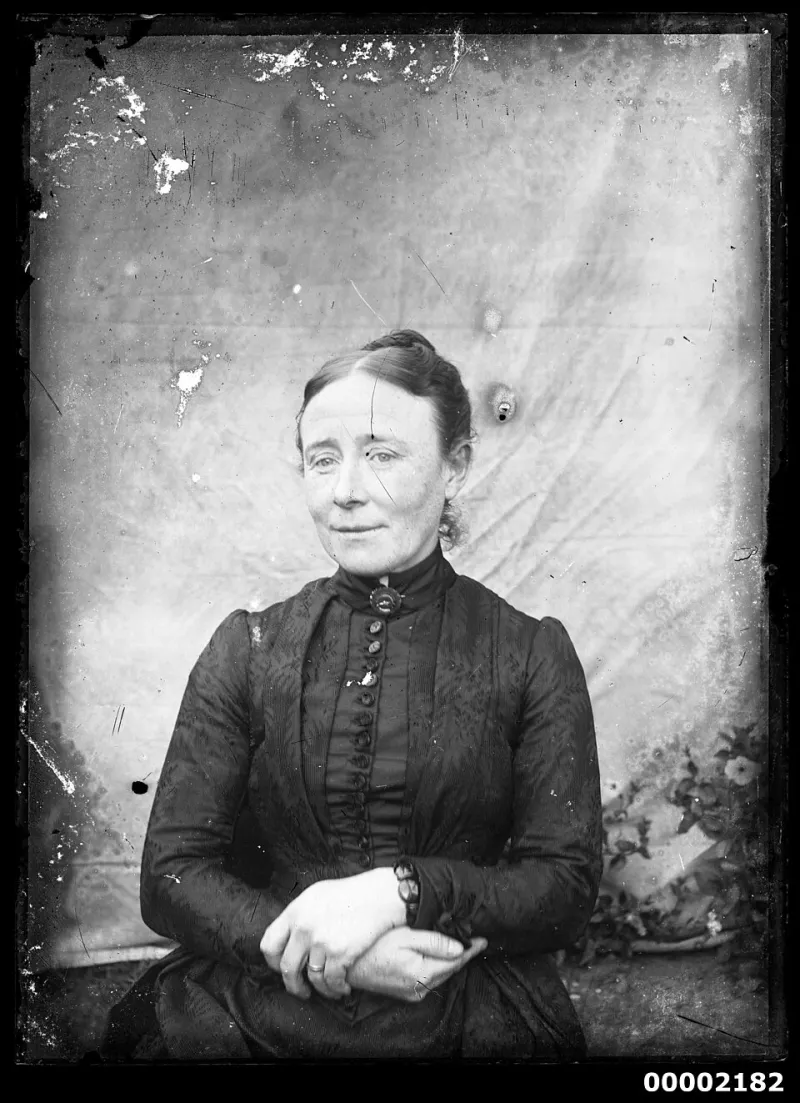
Photo: Australian National Maritime Museum on The Commons, No restrictions, via Wikimedia Commons
America Learned to Say 'Thinking of You' From a Victorian Death Obsession
Walk into any CVS or Walgreens and you'll find an entire aisle dedicated to paper feelings. Birthday cards, anniversary cards, sympathy cards, 'just because' cards, cards for pets, cards for graduations, cards for people who just got divorced. Americans buy approximately 6.5 billion greeting cards every year — more per capita than any other country on earth.
Most people assume this is a modern retail invention, some mid-century marketing scheme cooked up by Hallmark to sell more paper products. The real origin is stranger, older, and considerably more morbid than that.
It starts with grief. Specifically, with the way wealthy Victorians handled death.
When Mourning Had a Dress Code
In 19th-century Britain and America, grief wasn't a private matter. It was a public performance with strict social rules — and the upper and middle classes took those rules seriously.
When someone died, the family was expected to enter a formal mourning period that could last anywhere from a few months to several years, depending on the relationship to the deceased. Widows wore black for years. Children wore black armbands. Households draped mirrors in dark cloth. Social calls were restricted. And communication — the act of reaching out to a grieving family — was governed by elaborate etiquette.
You didn't just show up. You sent a card.
Formal printed mourning cards, often bordered in black with somber typography and carefully composed language, became a staple of upper-class correspondence in the mid-1800s. These weren't handwritten notes — they were printed, often by professional lithographers, and considered the appropriate formal gesture when words felt inadequate or a personal visit wasn't possible. The cards were kept, displayed, and in some cases, carefully preserved as records of social standing. Who had sent a card mattered.
The industry around these mourning cards was small but profitable. And one American printer was paying very close attention.
The Boston Lithographer Who Spotted Something
Louis Prang arrived in Boston in 1850 as a German immigrant with a background in printing and a sharp eye for commercial opportunity. He built a successful lithography business and became known for producing some of the finest color printing in America — a technically demanding process at a time when most printed images were crude and flat.
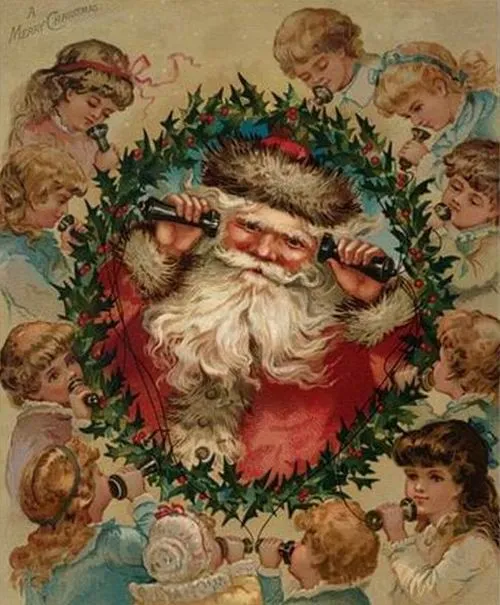 Photo: Louis Prang, via i.pinimg.com
By the late 1860s, Prang was watching the mourning card trade with interest. But he saw something the funeral stationers had missed: the underlying behavior — buying a printed card to express an emotion you didn't quite know how to articulate — wasn't really about death. It was about the difficulty of saying certain things out loud.
In 1874, Prang made a pivot. He began producing Christmas cards.
The concept wasn't entirely new — a British civil servant named Henry Cole had produced what's generally considered the first commercial Christmas card in London in 1843 — but Cole's cards had never achieved mass adoption. Prang's were different. They were printed in rich, vivid colors using a chromolithography process that made them look almost like paintings. They were beautiful objects. And Prang marketed them aggressively, even running design competitions that attracted serious artists and generated press coverage.
 Photo: Henry Cole, via static.wixstatic.com
Americans, who had been culturally primed by Victorian mourning customs to see printed cards as a legitimate form of emotional communication, responded enthusiastically. By the early 1880s, Prang was producing and selling over five million Christmas cards a year.
He had, almost by accident, invented the modern American greeting card.
The Pivot to Every Occasion
Prang's success attracted imitators — and then a flood of cheaper imports from Germany that eventually undercut his business. He stepped back from the card market in the early 1890s. But the habit he'd helped establish didn't go anywhere.
Other publishers began expanding the concept. If a card worked for Christmas, why not for birthdays? For Valentine's Day, which had its own Victorian traditions? For Easter? For anniversaries?
The logic was sound, and it was the same logic that had made mourning cards popular in the first place: there are moments in life when you want to acknowledge something — a milestone, a loss, a celebration — but the right words don't come easily. A printed card solved that problem. It gave people language they couldn't always find on their own.
By the early 20th century, the greeting card industry in America was growing steadily. Then, in 1910, a young man named Joyce Hall arrived in Kansas City with a shoebox full of postcards and a vision for something bigger. He and his brothers founded what would eventually become Hallmark Cards, which today controls roughly 40 percent of the American greeting card market.
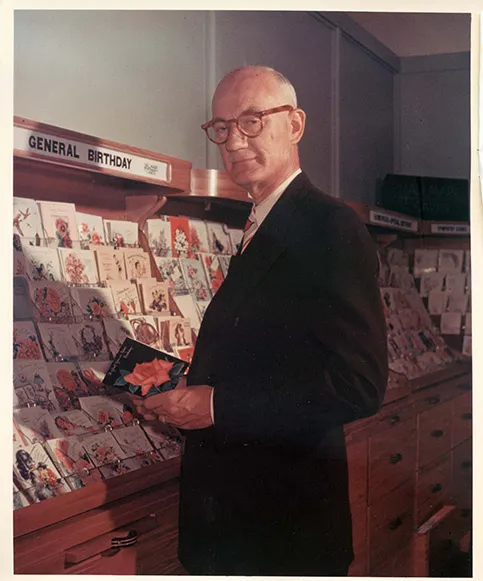 Photo: Joyce Hall, via www.hallfamilyfoundation.org
Why Americans Became the World's Biggest Card Buyers
The United States buys more greeting cards per person than any other country. The UK is a distant second. Most of the rest of the world doesn't come close.
Cultural historians point to a few reasons. Americans tend to be emotionally expressive but also geographically mobile — a country of people who moved away from their families, their hometowns, their communities, and needed ways to maintain connection across distance. A card could cross the country in a few days and say what a phone call might fumble.
There's also something in the American cultural tradition of marking occasions. Birthdays, holidays, milestones — these matter, and the card is a tangible proof of remembrance. It says: I thought of you specifically, on this specific day, enough to stop and send something.
That impulse, it turns out, was already present in Victorian mourning culture. Louis Prang didn't create it. He just gave it a cheerier envelope.
The Billion-Dollar Business of Feeling Something
Today, the American greeting card industry generates roughly $7 to $8 billion in annual revenue. Digital cards exist, but physical card sales have remained remarkably resilient — people still want something they can hold, display on a mantle, or tuck into a drawer and find years later.
And every time someone stands in that drugstore aisle, turning cards over and reading the inside copy until they find the one that says what they couldn't quite say themselves — they're doing exactly what a Victorian widow was doing when she sent a printed condolence note to a grieving neighbor.
The feeling hasn't changed. Just the occasion.