The Traffic Engineers Who Decided Cars Mattered More Than People
Before Cars, Streets Belonged to Everyone
In 1900, American city streets were chaotic but democratic. Children played in the roadway. Vendors sold goods from carts. Pedestrians walked wherever they pleased. Horses, bicycles, streetcars, and people all shared the same space in a complex dance of urban movement.
Then automobiles arrived and changed everything—not because cars were inherently superior, but because a small group of traffic engineers decided that streets should be redesigned around automotive convenience rather than human needs.
The pedestrian crossing signal, that ubiquitous red hand and walking figure that controls every American intersection, wasn't invented to help people cross streets safely. It was designed to train Americans to get out of the way.
The Great Street War of the 1920s
When cars first appeared on American streets, they were the intruders. Pedestrians had legal right-of-way almost everywhere, and drivers were expected to navigate carefully around people. Early automobile fatalities were treated as criminal matters—the driver had failed to avoid hitting someone who belonged on the street.
This arrangement infuriated early automotive advocates, who saw pedestrian traffic as an obstacle to efficient transportation. By 1920, groups like the National Automobile Chamber of Commerce were funding studies to prove that streets would be safer and more efficient if redesigned around automotive traffic rather than pedestrian movement.
The conflict came to a head in major cities where automobile sales were concentrated. Detroit, Los Angeles, and New York became testing grounds for competing visions of how American streets should work. Would cities prioritize people or cars?
The Engineers Who Chose Sides
The answer came from an unlikely source: traffic engineering, a new profession that emerged specifically to manage the chaos created by mixing automobiles with existing street life. The first traffic engineers were often former railroad engineers who understood how to move large mechanical systems efficiently.
These engineers faced a choice. They could design systems that protected pedestrians while accommodating cars, or they could design systems that maximized automotive efficiency while managing pedestrian movement. Led by figures like Miller McClintock at Harvard and Burton Marsh in Los Angeles, they chose cars.
McClintock's 1925 study "Street Traffic Control" became the bible of American traffic engineering. Rather than asking how to make streets safe for everyone, McClintock asked how to make pedestrian behavior predictable enough that cars could move efficiently. His solution was systematic pedestrian control.
The Birth of the Crossing Signal
The first pedestrian crossing signals appeared in New York City in 1922, but they weren't the familiar red hand and walking figure Americans know today. Early signals were simple "WALK" and "DON'T WALK" signs designed to coordinate pedestrian movement with vehicle traffic light cycles.
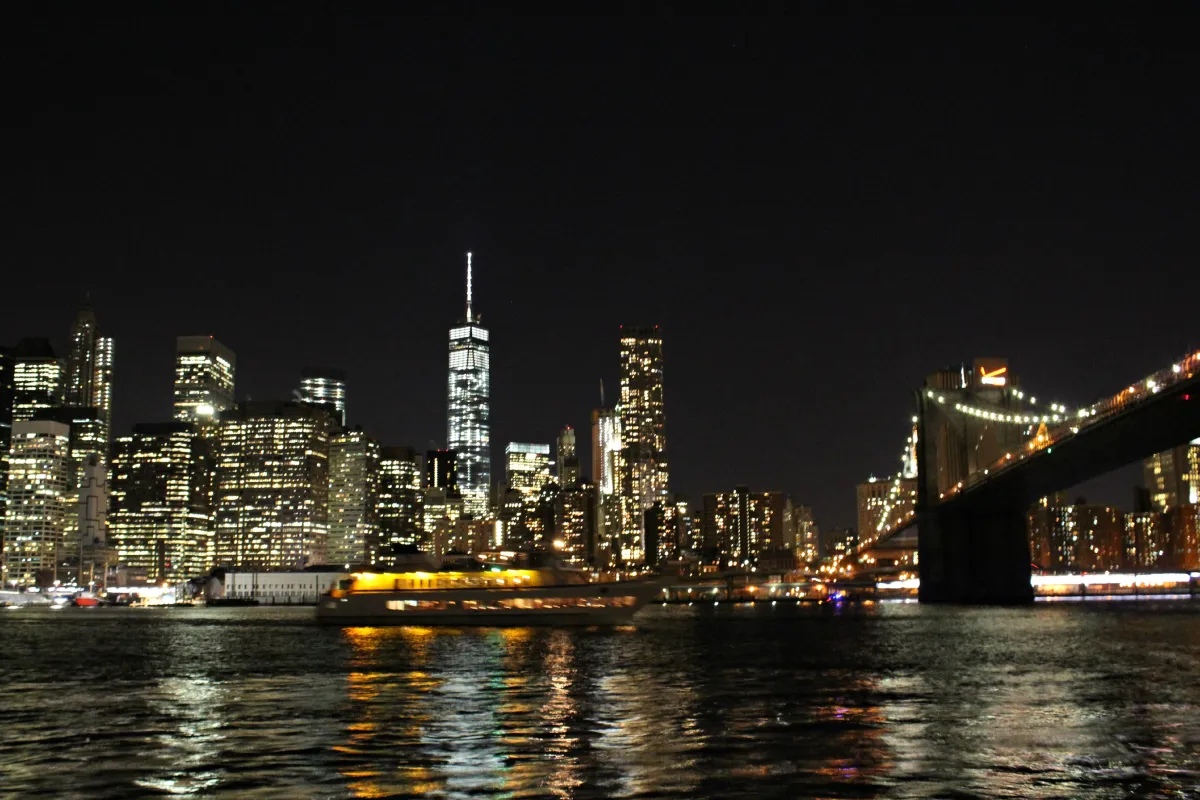 Photo: New York City, via www.thebrew.me
The innovation was subtle but revolutionary. Instead of expecting cars to navigate around pedestrians, the signals trained pedestrians to move only when cars weren't using the intersection. Streets were being reorganized around automotive schedules, not human schedules.
Traffic engineers celebrated this as scientific progress. They had transformed unpredictable human behavior into manageable patterns that could be optimized for vehicular efficiency. Pedestrians were becoming part of the traffic control system rather than independent users of public space.
The Psychology of the Red Hand
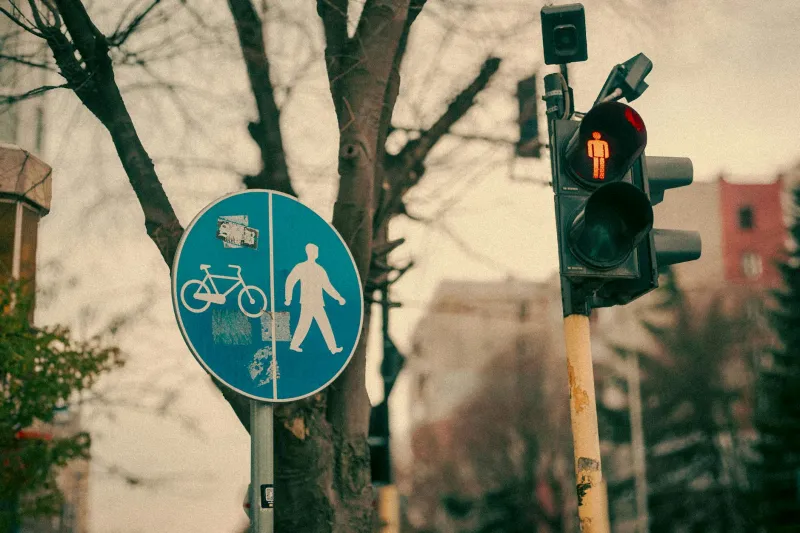
The familiar red hand symbol that tells Americans not to cross appeared in the 1970s, developed by traffic psychologists who wanted to create more effective behavioral control. The upraised palm was chosen specifically because it triggered subconscious obedience responses—the same gesture used by authority figures to command "stop."
This wasn't accident. Traffic engineers had studied how to make pedestrians more compliant with automotive traffic patterns. The red hand was designed to feel authoritative in a way that simple text couldn't match. It was behavioral engineering disguised as public safety.
The walking figure that replaced "WALK" text served a similar purpose. Rather than giving pedestrians permission to use public space, the symbol suggested that walking was an activity that required official authorization. Americans learned to wait for permission to cross their own streets.
The Jaywalking Invention
To make pedestrian signals effective, traffic engineers needed legal backing. They lobbied for "jaywalking" laws that made it illegal for pedestrians to cross streets except at designated locations and times. The term "jaywalking" itself was automotive industry propaganda—"jay" was 1920s slang for an unsophisticated rural person who didn't understand modern urban rules.
Before jaywalking laws, pedestrians could cross streets wherever they chose, and drivers were responsible for avoiding them. After jaywalking laws, pedestrians who were hit by cars outside of designated crossing areas were legally at fault for their own injuries. The legal framework had flipped completely.
This legal transformation made crossing signals essential. If pedestrians could only cross at designated locations and times, cities needed infrastructure to tell them when crossing was permitted. The signal became both a control device and a liability shield for municipal governments.
The Unchanged Design
Remarkably, the basic design of pedestrian crossing signals hasn't changed significantly since the 1970s. While smartphones have revolutionized communication and GPS has transformed navigation, Americans still wait for the same red hand and walking figure that their grandparents learned to obey.
This technological stagnation isn't accidental. The crossing signal works exactly as designed—it controls pedestrian behavior to optimize automotive traffic flow. Improving the pedestrian experience was never the primary goal, so there's been little pressure to innovate.
Modern traffic engineers occasionally propose pedestrian-friendly innovations like scramble crossings or extended crossing times, but these modifications work within the same basic framework that prioritizes automotive efficiency over pedestrian convenience.
The Global Perspective
Other developed nations made different choices about street design and pedestrian priority. Many European cities maintained pedestrian-first street designs even as they accommodated automobiles. Their crossing signals often provide longer crossing times, more frequent crossing opportunities, and design features that prioritize walking over driving.
Japanese cities developed sophisticated pedestrian infrastructure that treats walking as a primary transportation mode rather than an obstacle to automotive traffic. Their crossing signals are part of comprehensive pedestrian networks designed to make walking efficient and pleasant.
American cities, by contrast, still operate under traffic engineering principles developed in the 1920s to maximize automotive throughput. The crossing signal remains a tool for managing pedestrians rather than serving them.
The Modern Reckoning
Today's debates about walkable cities, bike lanes, and public transit are essentially arguments about whether American streets should continue prioritizing automotive efficiency over human needs. The pedestrian crossing signal sits at the center of these discussions—a small piece of infrastructure that embodies larger questions about how cities should work.
Some cities are experimenting with pedestrian-priority signal timing, extended crossing phases, and intersection designs that give people more time and space to move safely. But these changes face resistance from traffic engineers trained in automotive-first principles that date back nearly a century.
The red hand and walking figure that control every American intersection represent more than traffic management—they're symbols of a choice American cities made long ago to organize public space around private vehicles rather than public life.
Every time Americans press a crosswalk button and wait for permission to cross their own streets, they're participating in a system designed not to serve pedestrians, but to keep them out of the way. The signal that seems designed for safety was actually engineered for automotive convenience, and nearly a century later, it's still working exactly as intended.