How Doctor's Offices Accidentally Created America's Magazine Obsession
The Accidental Reading Laboratory
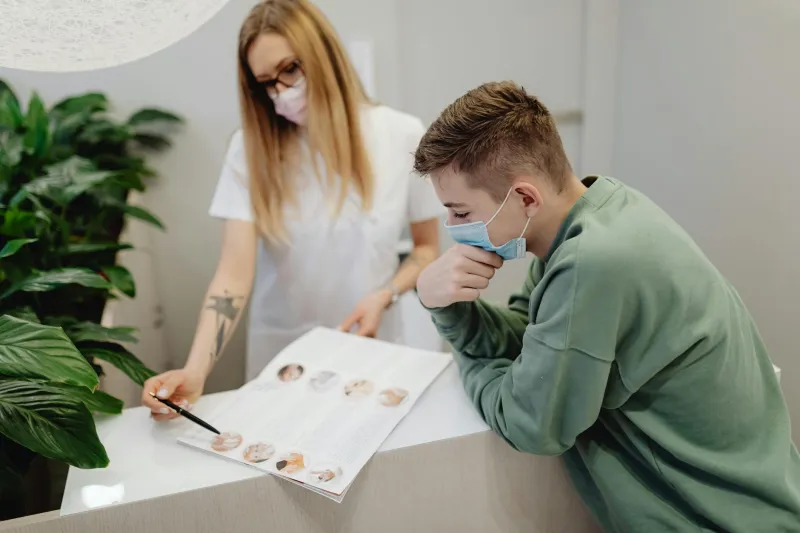
Walk into any doctor's office in America, and you'll find the same scene: a coffee table scattered with magazines from three months ago, their pages dog-eared from countless nervous fingers. What seems like a mundane waiting room courtesy actually represents one of the most successful marketing experiments in publishing history—one that nobody planned.
In the years following World War II, magazine publishers faced a crisis. Television was stealing their audience, and the casual reading habits that had sustained publications during the war were evaporating. Americans were busy building suburbs and starting families, with little time for leisurely magazine browsing.
Then something unexpected happened. Medical practices, expanding rapidly to serve the growing middle class, began stocking their waiting rooms with magazines as a simple courtesy to anxious patients. What they accidentally created was a captive audience with nothing to do but read.
The Captive Audience Revolution
Dr. William Hadley, who opened a family practice in suburban Chicago in 1952, later recalled the phenomenon: "Patients would arrive fifteen minutes early and sit there for another twenty minutes waiting. They'd read anything we put in front of them—cover to cover."
This wasn't casual browsing. Waiting room readers were a unique audience: stressed, distracted, and desperate for mental escape. They'd read articles they would never choose at home, flip through publications outside their normal interests, and absorb content with an intensity that surprised even the publishers.
Magazine circulation managers began to notice something strange in their distribution data. Subscriptions to medical offices were generating far more reader engagement than home subscriptions. A single copy in a waiting room might be read by fifty people, each spending significantly more time with the publication than typical home readers.
The Demographics of Distraction
Waiting rooms created an unusual cross-section of American society. Unlike bookstores or newsstands, which attracted specific demographics, medical offices drew everyone: suburban housewives, blue-collar workers, business executives, teenagers—all sitting together, all equally bored, all equally willing to read whatever was available.
This diversity proved invaluable for publishers trying to understand American tastes. Magazines that succeeded in waiting rooms often translated to broader commercial success. Publications that failed to hold the attention of distracted, anxious readers rarely survived in the general market.
Reader's Digest became the perfect waiting room magazine—short articles, diverse topics, easy to pick up and put down. National Geographic thrived because its stunning photography provided visual escape from sterile medical environments. People magazine, launched in 1974, was practically designed for the waiting room experience: celebrity gossip that required no sustained attention but provided perfect distraction.
 Photo: National Geographic, via www.topbusinesswomen.co.za
 Photo: Reader's Digest, via 1.bp.blogspot.com
The Subscription Strategy
By the 1960s, magazine publishers had developed sophisticated strategies for medical office distribution. They offered deeply discounted subscriptions to healthcare providers, knowing that waiting room exposure would drive home subscriptions and newsstand sales.
Some publishers went further, creating special waiting room editions with extra-durable covers and content specifically chosen for anxious readers. Articles about health, family, and light entertainment performed best. Complex political analysis or dense technical writing was avoided—waiting room readers wanted escape, not intellectual challenge.
The strategy worked. During the 1960s and 1970s, when television was supposedly killing print media, magazine readership actually increased. Industry surveys consistently showed that Americans' first exposure to new publications happened in medical offices, not at newsstands or through advertising.
The Digital Disruption
The rise of smartphones has fundamentally changed the waiting room dynamic. Today's patients are more likely to scroll through social media than flip through magazines. Many medical offices have removed magazines entirely, citing hygiene concerns and changing patient preferences.
This shift has had profound implications for print publishing. Without the guaranteed exposure of waiting room readership, magazines have lost one of their most reliable audience development tools. The casual discovery that once happened in medical offices now occurs through social media algorithms and online recommendations—a fundamentally different, more fragmented experience.
The Lasting Legacy
The waiting room magazine phenomenon helped establish reading habits that lasted decades. Baby Boomers who grew up flipping through Life and Look in pediatricians' offices became lifelong magazine subscribers. The eclectic reading tastes developed during medical visits—a willingness to explore unfamiliar topics and publications—became a defining characteristic of American media consumption.
Even today, despite smartphones and digital distractions, the waiting room remains a unique space in American culture. It's one of the few places where strangers sit quietly together, temporarily united by shared anxiety and boredom. The magazines may be disappearing, but the ritual they created—the search for distraction during vulnerable moments—continues in new forms.
The next time you're sitting in a doctor's office, scrolling through your phone while ignoring the lone magazine on the table, remember: you're witnessing the end of an accidental revolution that helped shape American reading habits for half a century.