The Word Americans Can't Pronounce That Built Our Dining Culture
The Furniture That Became a Feast
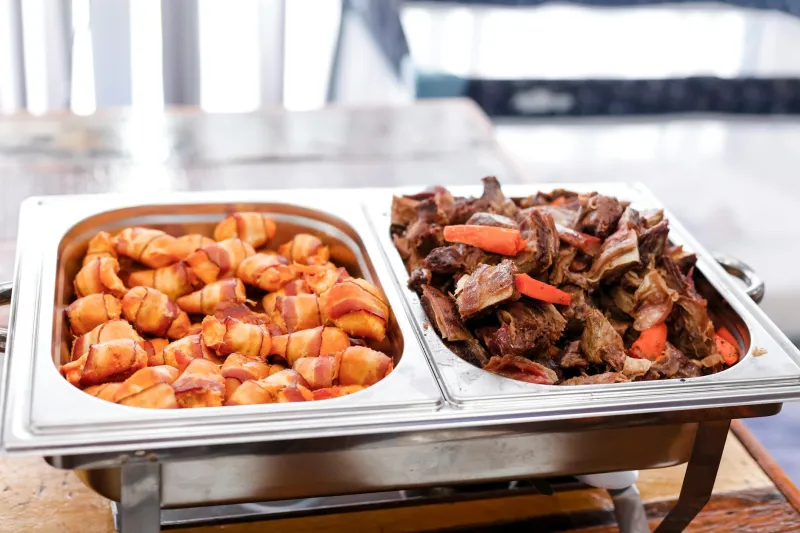
Every American knows what a "BUFF-it" is—that glorious spread of steam tables and sneeze guards where you pile your plate high and go back for seconds. What most don't realize is that they're mispronouncing a French word that originally had nothing to do with eating and everything to do with showing off expensive furniture.
In 18th-century France, a "buffet" (pronounced "boo-FAY") was an ornate sideboard where wealthy families displayed their finest dishes, silverware, and serving pieces. It was furniture as status symbol, designed to impress dinner guests with the host's wealth and taste. The actual food was served by servants from the kitchen—touching the buffet display was strictly forbidden.
How this aristocratic furniture piece became synonymous with American all-you-can-eat culture is a story of immigration, adaptation, and the peculiar American talent for democratizing luxury.
The Democratic Revolution of Dining
The transformation began in the mid-1800s when waves of European immigrants brought fragmented memories of Old World dining customs to America. French and German immigrants remembered the concept of buffet service from their homelands, but in America's more egalitarian society, the rigid class distinctions that governed European dining made little sense.
American hotels, particularly in the expanding West, began offering "buffet-style" meals where guests could serve themselves from a central table. This wasn't about elegance or status—it was pure practicality. Hotel dining rooms needed to feed large numbers of travelers quickly and efficiently, and self-service solved multiple problems at once.
The pronunciation shifted almost immediately. "Boo-FAY" sounded pretentious to American ears, so it became "BUFF-it"—more democratic, more accessible, more American. By the 1880s, railroad dining cars were advertising "buffet service," and nobody was pronouncing it the French way.
The Vegas Revolution
The modern American buffet was born in Las Vegas in 1946, thanks to a publicity stunt by casino owner Herb McDonald. The El Rancho Vegas was struggling to compete with flashier casinos, so McDonald decided to offer an all-you-can-eat midnight meal for just one dollar. He called it the "Buckaroo Buffet"—playing up the Wild West theme while solving the practical problem of feeding gamblers who didn't want to leave the casino floor.
 Photo: El Rancho Vegas, via thumb-lvlt.xhcdn.com
 Photo: Las Vegas, via img.freepik.com
The concept was revolutionary. Previous buffets had been genteel affairs with limited selections and implicit social rules about moderation. McDonald's buffet was pure abundance: mountains of food, no restrictions, no judgment. Take as much as you want, come back as often as you like.
Other Vegas casinos quickly copied the idea, each trying to outdo the others with more elaborate spreads. The buffet became a loss leader—casinos made their money from gambling, not food sales, so they could afford to offer extravagant meals at below-cost prices. This created an arms race of abundance that would define American buffet culture for decades.
The Suburban Conquest
By the 1960s, the Vegas-style buffet had escaped the desert and invaded suburban America. Chain restaurants like Golden Corral and Ponderosa brought all-you-can-eat dining to strip malls and highway exits across the country. The appeal was obvious: families could feed multiple people with different tastes for a fixed, predictable price.
 Photo: Golden Corral, via ei-ph.rdtcdn.com
The suburban buffet represented a distinctly American interpretation of abundance. Unlike European dining, which emphasized quality and restraint, the American buffet celebrated quantity and choice. It was democracy applied to food—everyone paid the same price and had access to the same selection, regardless of social status or sophistication.
This democratic ideal came with its own rituals and etiquette. The "buffet walk"—that careful reconnaissance mission to survey all available options before making selections. The strategic plate management to maximize variety and value. The unspoken rules about not cutting in line or hogging the serving spoons.
The Cultural Impact
The mispronounced buffet became more than just a dining option—it became a metaphor for American abundance and opportunity. "Life is like a buffet" became a common saying, expressing the idea that America offered unlimited choices and opportunities for those willing to help themselves.
This metaphor shaped how Americans thought about everything from career choices to consumer goods. The buffet mentality—take what you want, try everything, don't limit yourself—became deeply embedded in American culture. It influenced the development of suburban shopping malls, cable television packages, and even internet content consumption.
The Modern Evolution
Today's buffets face new challenges. Health consciousness has made many Americans wary of communal serving situations. The COVID-19 pandemic dealt a severe blow to buffet restaurants, with many permanently closing or converting to different service models.
Yet the buffet concept persists in new forms. Salad bars, frozen yogurt shops with multiple toppings, and even streaming services with vast content libraries all follow the buffet model: pay one price, consume as much as you want, make your own choices.
The word itself has evolved beyond dining. Americans now talk about "buffet-style" learning, "buffet Christianity" (picking and choosing religious beliefs), and "buffet investing" (diversified portfolios). The mispronounced French furniture term has become a fundamental American concept.
The Persistence of Mispronunciation
Despite decades of French language education and cultural sophistication, most Americans still say "BUFF-it" rather than "boo-FAY." This isn't ignorance—it's cultural ownership. Americans have made the word their own, adapting both its pronunciation and meaning to fit their values and needs.
The next time you're loading up your plate at a Golden Corral or hometown buffet, remember: you're participating in a uniquely American tradition that transformed an aristocratic French furniture piece into a symbol of democratic abundance. And you're probably mispronouncing it—just like everyone else.