Breakfast, Lunch, and Dinner Aren't Natural — Here's Who Actually Invented Your Eating Schedule

Photo: Warren LeMay from Cincinnati, OH, United States, CC0, via Wikimedia Commons
Breakfast, Lunch, and Dinner Aren't Natural — Here's Who Actually Invented Your Eating Schedule
Somewhere around noon today, you probably felt hungry. Maybe you glanced at the clock, confirmed it was approximately lunchtime, and either went to get something to eat or told yourself you'd wait a little longer. The hunger and the clock felt connected — like your body was following a schedule built into human biology.
It wasn't. The feeling was real. The schedule is invented.
The idea that humans need three meals a day — breakfast, lunch, and dinner, consumed at roughly predictable intervals — is not ancient wisdom or nutritional science. It's a social construction that took shape over a few centuries, got locked in by industrial work patterns, and was then enthusiastically reinforced by food companies who had a vested interest in making sure Americans ate on a regular, predictable clock. Understanding where the three-meal structure actually came from doesn't just reframe diet culture — it changes how you think about every food habit you've never questioned.
How People Actually Ate Before the Schedule
For most of human history, meal timing was flexible in ways that would feel chaotic by modern standards. Hunter-gatherer societies ate when food was available, which was not necessarily three times a day on a consistent schedule. Early agricultural communities ate around work rhythms and seasonal availability. The Romans, often held up as an example of ancient civilization, largely ate one main meal a day — around midday — and considered eating multiple large meals a sign of excess or weakness.
Medieval Europeans generally ate twice a day: a morning meal after early work and a larger evening meal. The idea of a structured midday break for eating was not universal. Eating patterns varied enormously by class, region, climate, and occupation. There was no universal human meal clock.
When European colonists arrived in North America, they encountered Indigenous communities with their own diverse and flexible eating patterns — patterns that the colonists often dismissed as uncivilized precisely because they didn't match European meal conventions. The imposition of European eating schedules on Indigenous peoples was, in some communities, a deliberate part of cultural assimilation efforts. The three-meal structure carried moral weight even then: it was associated with order, discipline, and civilization in ways that had nothing to do with nutrition.
 Photo: Indigenous peoples, via nationaltoday.com
The Factory Whistle Standardizes Hunger
The real standardization of American meal timing happened during the Industrial Revolution, and the mechanism was simple: factory work schedules.
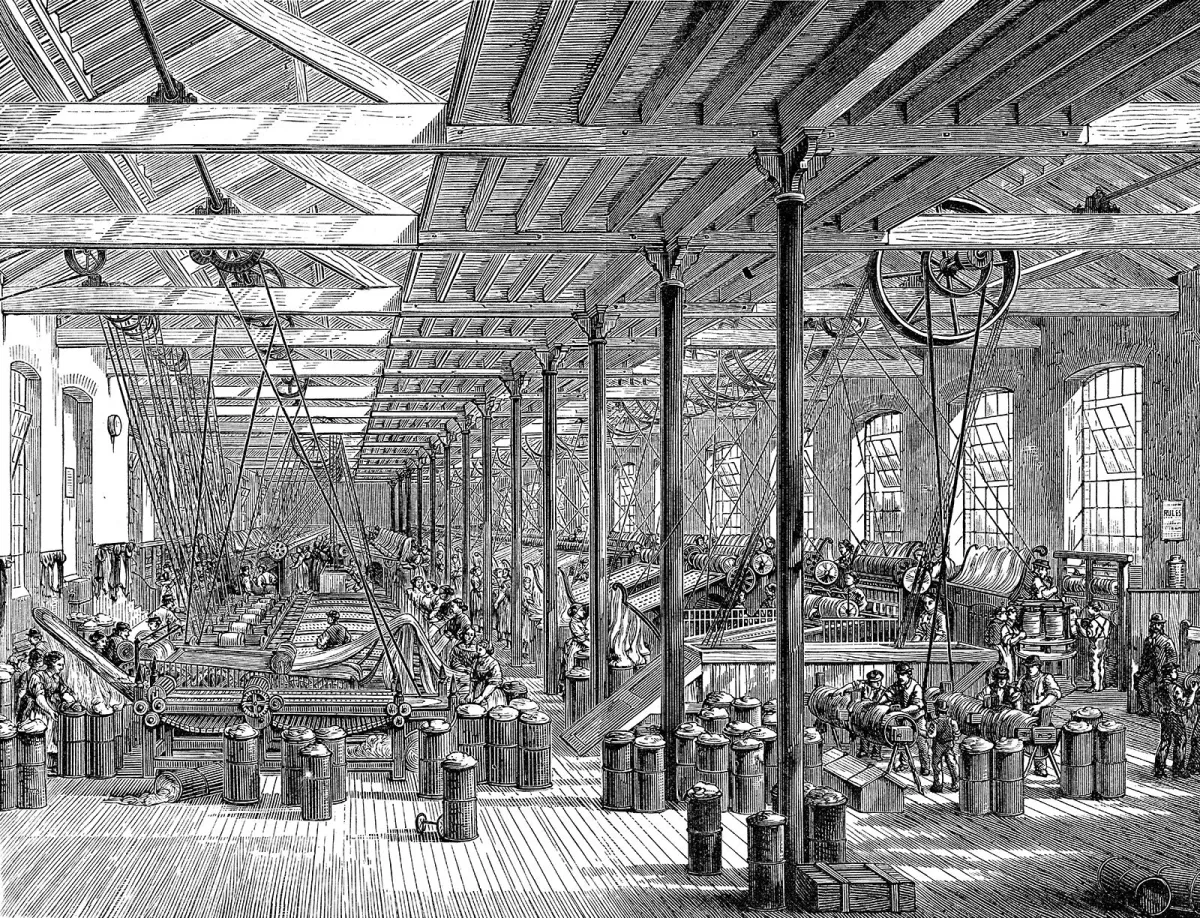 Photo: Industrial Revolution, via cdn.britannica.com
When large numbers of people began working in factories in the 19th century, their days were organized around fixed shifts with designated break periods. You couldn't eat whenever you were hungry — you ate when the whistle blew. Factories typically allowed a midday break of 30 to 60 minutes, which created a hard stop in the middle of the workday that needed to be filled with something. Lunch — as a distinct, scheduled meal — solidified around this industrial reality.
Workers who brought food from home developed the lunch pail as a cultural artifact. Vendors set up near factory gates. And the midday meal became a fixed point in the American day not because human bodies required it at exactly noon, but because industrial production schedules required workers to be back at their machines at a specific time.
Meanwhile, the morning meal became increasingly important as workers needed to fuel themselves before long shifts. Breakfast — once a modest, informal affair for many working people — got elevated into a meal with its own social and nutritional significance.
The Cereal Companies Finish the Job
If the factory whistle standardized the lunch break, it was the food industry that truly cemented the idea that each of these three meals was non-negotiable. And nowhere is this more visible than in the history of breakfast.
In the late 19th and early 20th centuries, American breakfast habits were inconsistent. Many working-class families ate whatever was available and quick. The idea that breakfast was the most important meal of the day — a phrase so familiar it feels like it came from a doctor — was largely a marketing construction. Cereal companies, most famously those based out of Battle Creek, Michigan, had a product that worked perfectly as a quick morning meal, and they spent decades and enormous advertising budgets convincing Americans that eating it every morning was not just convenient but medically necessary.
 Photo: Battle Creek, Michigan, via i.pinimg.com
The "most important meal of the day" framing was popularized in large part through advertising campaigns in the mid-20th century — including campaigns directly tied to cereal brands. Nutritionists did debate meal timing, and some research supported regular eating, but the specific cultural weight placed on breakfast as a mandatory daily ritual was amplified enormously by companies that needed Americans to buy a box of cereal every week.
Lunch and dinner got their own commercial reinforcement through restaurant culture, packaged food marketing, and eventually the fast food industry, which built entire business models around predictable American meal timing.
Why This Still Matters Today
The reason this history is worth knowing isn't to make you feel manipulated every time you eat lunch — it's to put modern food debates in context.
Intermittent fasting, which involves restricting eating to specific windows of the day, is often described as a radical or counterintuitive diet strategy. But from a historical perspective, it looks a lot more like a return to pre-industrial eating flexibility than a fringe experiment. The idea that skipping breakfast is dangerous or irresponsible is a relatively recent cultural construction, not a timeless nutritional truth.
Similarly, the guilt that many Americans feel about eating "off schedule" — snacking between meals, eating dinner late, skipping lunch — is largely a response to a social norm that was invented within the last 200 years and locked in by factory bells and cereal marketing.
None of this means the three-meal structure is wrong or harmful. Regular eating patterns do have real physiological benefits for many people. But those benefits exist on a spectrum, and the specific shape of the American daily eating clock — breakfast at 7, lunch at noon, dinner at 6 — is a cultural artifact, not a biological imperative.
Your hunger is real. The schedule you hang it on was built by someone else, for reasons that had more to do with industrial efficiency and product sales than with what your body actually needs.