The Saturday Morning Ritual Nobody Asked For
Every weekend, 85 million Americans fire up their lawn mowers for what's become a national obsession: maintaining perfectly manicured grass around their homes. We spend 70 hours a year on this ritual, burn through 800 million gallons of gas annually, and dedicate 40 million acres to residential lawns—an area larger than the entire state of Georgia. But here's the thing: none of this was supposed to happen.
 Photo of Georgia, via Wikidata/Wikimedia Commons
The American lawn empire started with a textile engineer who couldn't get his carpet machine to work properly.
When Grass Was a Rich Person's Problem
Before 1830, having a lawn wasn't just expensive—it was practically impossible for regular folks. Wealthy estate owners hired teams of workers with scythes to hand-cut their grass, or they let sheep graze to keep it short. The process was labor-intensive, time-consuming, and cost a fortune. Most Americans lived on farms or in cities where every patch of land served a practical purpose: growing food, housing animals, or conducting business.
The idea of dedicating valuable space to purely decorative grass seemed absurd to most people. It was like burning money in your front yard.
The Machine That Wasn't Supposed to Cut Grass
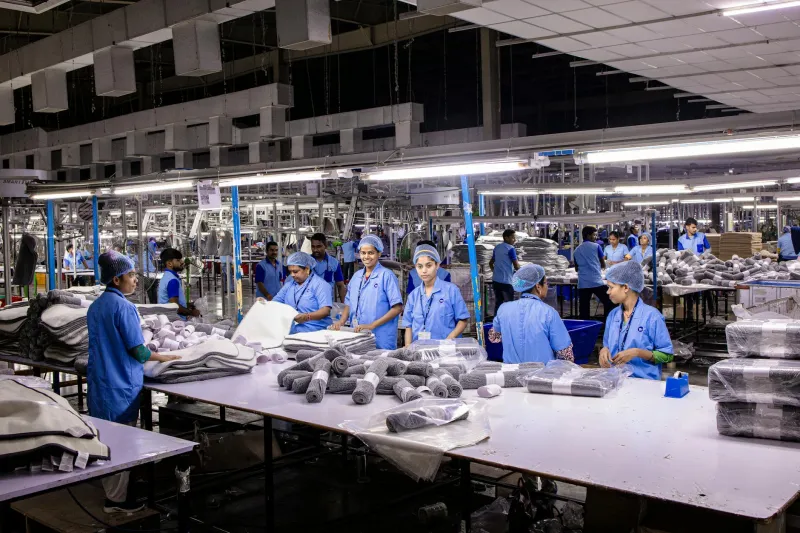
In 1830, Edwin Budding was working in a textile mill in Gloucestershire, England, trying to perfect a machine that would give carpets a smooth, even finish by trimming their surface. His contraption used a rotating cylinder with blades to shear fabric—but it kept jamming and producing uneven results.
 Photo of Gloucestershire, via Wikidata/Wikimedia Commons
Frustrated with his carpet-cutting failures, Budding noticed something interesting during his tests. When he accidentally ran the machine over the grass outside the factory, it cut the blades cleanly and uniformly. The mechanism that couldn't handle carpet suddenly worked perfectly on lawn grass.
Budding realized he'd stumbled onto something bigger than textile manufacturing. He filed a patent for the world's first mechanical lawn mower on August 31, 1830, describing it as a machine "for cropping or shearing the vegetable surface of lawns, grass-plots and pleasure grounds."
From English Curiosity to American Necessity
The lawn mower crossed the Atlantic in the 1850s, but it remained a novelty for decades. Early American adopters were mostly wealthy homeowners who wanted to show off their prosperity. Having a lawn meant you could afford to waste good land on something purely decorative.
Everything changed after World War II. Returning veterans needed homes, developers needed to build them quickly, and the federal government was backing mortgages for suburban houses. Suddenly, millions of Americans found themselves living in newly constructed neighborhoods where every house came with the same basic package: walls, roof, driveway, and a patch of grass.
The Suburban Peer Pressure Machine
Suburban developers didn't just sell houses—they sold a lifestyle. Marketing materials promised that homeowners could live like English aristocrats, complete with their own private lawns. Real estate ads featured families relaxing on perfect green carpets, children playing on pristine grass, and neighbors admiring each other's landscaping.
But there was a catch: if you wanted to fit into your new neighborhood, your lawn had to look as good as everyone else's. Community associations and local ordinances began requiring homeowners to maintain their grass. What started as a luxury became a legal obligation.
The Technology That Made It Possible
Mass production during the war had taught American manufacturers how to build machines quickly and cheaply. Companies like Toro and Lawn-Boy started producing affordable rotary mowers that middle-class families could actually buy. By 1960, owning a lawn mower was as common as owning a car.
The suburban boom created a feedback loop: more houses with lawns meant more demand for mowers, which drove prices down and made lawn ownership accessible to even more families. Grass seed companies, fertilizer manufacturers, and landscaping services built entire industries around maintaining residential lawns.
The Billion-Dollar Accident
Today, Americans spend $47 billion annually on lawn care—more than the GDP of many countries. We use 30% of our residential water supply keeping grass green, apply 70 million pounds of pesticides to our yards each year, and run gas-powered mowers that produce as much pollution per hour as driving 100 miles in a car.
All because a textile engineer couldn't get his carpet machine to work properly.
Why We Can't Stop Mowing
The lawn has become so deeply embedded in American culture that questioning it feels almost unpatriotic. It represents order, prosperity, and community belonging. A well-maintained lawn signals that you're a responsible homeowner who takes pride in your property and respects your neighbors.
Trying to opt out isn't easy. Homeowners associations can fine you for letting your grass grow too long. Local ordinances can force you to mow or hire someone to do it for you. The social pressure is real: nobody wants to be the neighbor with the messy yard.
Edwin Budding probably never imagined that his failed carpet machine would create a national obsession that defines American suburbia. He just wanted to cut fabric more efficiently. Instead, he accidentally invented a weekend ritual that 85 million Americans now consider essential to the good life.
Every Saturday morning, as millions of mowers fire up across the country, we're participating in the legacy of a 19th-century textile mistake that somehow became the American dream.