
The Swamp Nobody Wanted
In 1881, Samuel Gross stood ankle-deep in mosquito-infested marshland nine miles outside Chicago, staring at what everyone told him was the worst real estate purchase in Illinois history. The 1,600 acres of soggy prairie he'd bought for a song was so remote that locals joked you needed a compass and three days' rations just to find it.
 Photo of Samuel Gross, via Wikidata/Wikimedia Commons
Gross had made his fortune developing inner-city tenements, but a financial panic had left him cash-poor and land-rich in the middle of nowhere. What happened next would accidentally invent the American suburb—though nobody, least of all Gross himself, saw it coming.
The Desperate Pitch That Changed Everything
Faced with financial ruin, Gross did what any desperate salesman would do: he got creative with his marketing. Instead of trying to hide the fact that his land was miles from civilization, he made it the selling point.
"Escape the crowded, unhealthy city!" his advertisements proclaimed. "Own your own piece of paradise where fresh air and green lawns await!" He promised buyers they could have a house with a yard—something impossible for working-class families cramped into Chicago's tenements—for the same price as a tiny city apartment.
The pitch was revolutionary for its time. In the 1880s, wealthy Americans lived in grand city mansions while everyone else crowded into urban boarding houses and cramped apartments. The idea that regular working people could own detached houses with yards was almost unthinkable.
The Commuter Rail Gamble
Gross's masterstroke was convincing the Chicago & North Western Railway to extend a commuter line to his development. He argued that workers would pay premium fares to escape the city each evening, even if it meant a 45-minute train ride each way.
Railroad executives thought he was crazy. Who would want to live so far from their jobs? But Gross sweetened the deal by offering to buy thousands of train tickets upfront, guaranteeing the railway wouldn't lose money on the experiment.
When the first commuter train rolled into "Grossdale" (later renamed Brookfield) in 1883, it carried 12 curious families willing to bet their futures on Gross's vision of "country living for city workers."
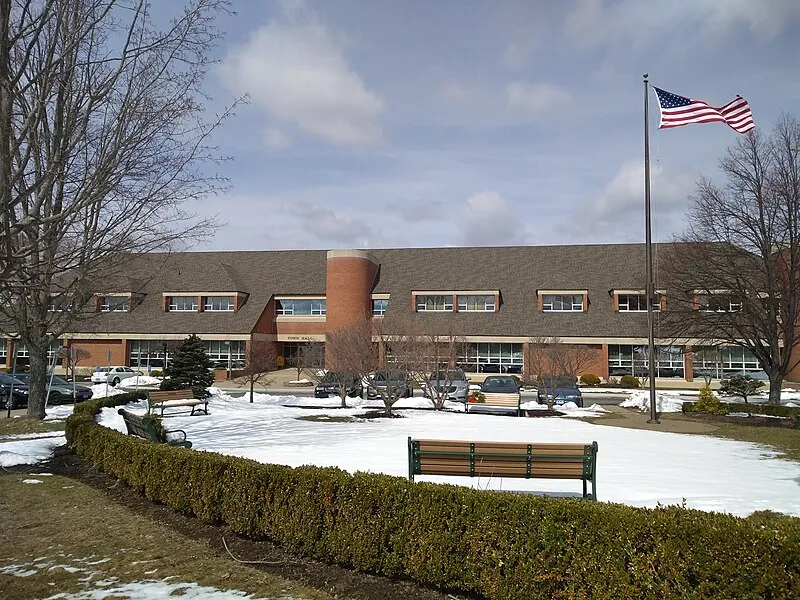 Photo of Brookfield, via Wikidata/Wikimedia Commons
The Template Takes Hold
What made Gross's development different wasn't just the location—it was the layout. Unlike the random sprawl of most frontier towns, Grossdale was carefully planned with curved streets, uniform lot sizes, and strict building codes that required houses to be set back from the street with front yards.
Gross mandated that every home have indoor plumbing, electric lighting, and a minimum lot size of 50 by 150 feet. These weren't luxury features—they were marketing necessities to convince city dwellers that suburban life wouldn't mean giving up modern conveniences.
The formula worked so well that copycat developments began sprouting around every major American city. Developers from Boston to San Francisco started buying cheap land outside urban centers and marketing it with Gross's "healthy country living" pitch.
From Novelty to Necessity
By 1900, what started as one man's desperate real estate scheme had become a nationwide phenomenon. The federal government noticed, and suburban development got a massive boost from New Deal housing policies in the 1930s and GI Bill mortgages after World War II.
The suburban template that Gross accidentally created—detached houses on individual lots, connected to cities by commuter transportation, marketed as healthier alternatives to urban living—became so standard that Americans forgot it was ever an innovation.
The Unintended Consequences
Gross died in 1913, long before he could see how completely his swampland experiment would reshape American life. Today, more than 200 million Americans live in suburban communities that follow his basic blueprint: single-family homes on quarter-acre lots, connected to employment centers by highways instead of rail lines.
The irony is that Gross never intended to revolutionize American living patterns. He was just trying to unload some worthless marshland before it bankrupted him. His "revolutionary" ideas about suburban design were really just desperate marketing tactics to make remote, flood-prone property seem appealing.
The Legacy of a Failed Investment
Drive through any American suburb today—from Levittown to modern planned communities in Arizona—and you're seeing variations on Samuel Gross's original template. The curved streets, front yard setbacks, and emphasis on single-family homeownership all trace back to that mosquito-infested swampland outside Chicago.
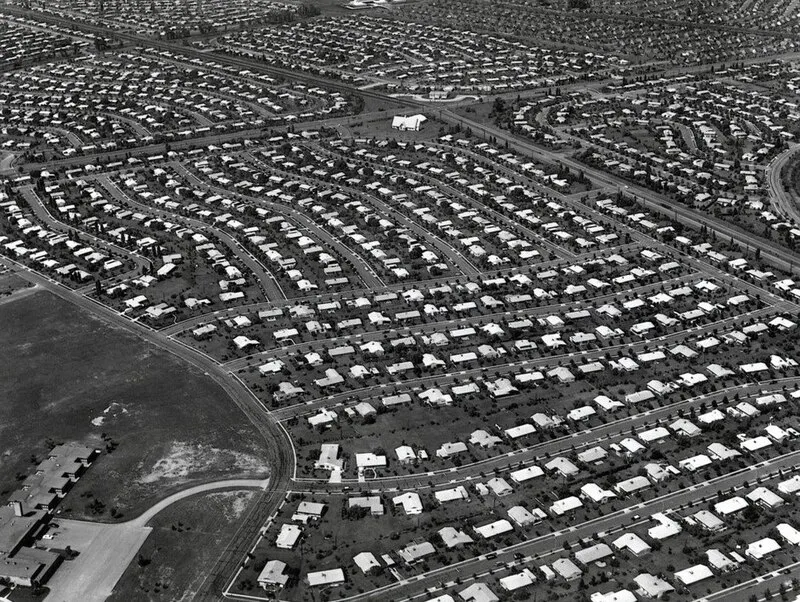 Photo of Levittown, via Wikidata/Wikimedia Commons
What started as one developer's creative solution to a bad real estate investment accidentally became the defining characteristic of the American Dream. Sometimes the most influential ideas come not from grand visions, but from desperate people trying to make the best of a terrible situation.
Gross's swampland gamble proves that the suburbs weren't inevitable—they were accidental. And that accident shaped how most Americans have lived for the past 140 years.