The Expensive Curiosity Nobody Could Afford
Before 1943, rubber bands were luxury items. Invented in London in 1845, they remained expensive curiosities for nearly a century—too costly for everyday use and primarily found in banks, post offices, and other businesses that could justify the expense. Most American households had never owned one.
That all changed because of a paperwork mistake during World War II that accidentally democratized one of history's most useful inventions.
The rubber band's journey to American ubiquity began with wartime rationing. When Japan captured rubber-producing regions in Southeast Asia, the U.S. government strictly controlled latex supplies. Every ounce was precious, allocated through a complex system of permits and priorities. Medical supplies ranked high on the list—which is where our story takes an unexpected turn.
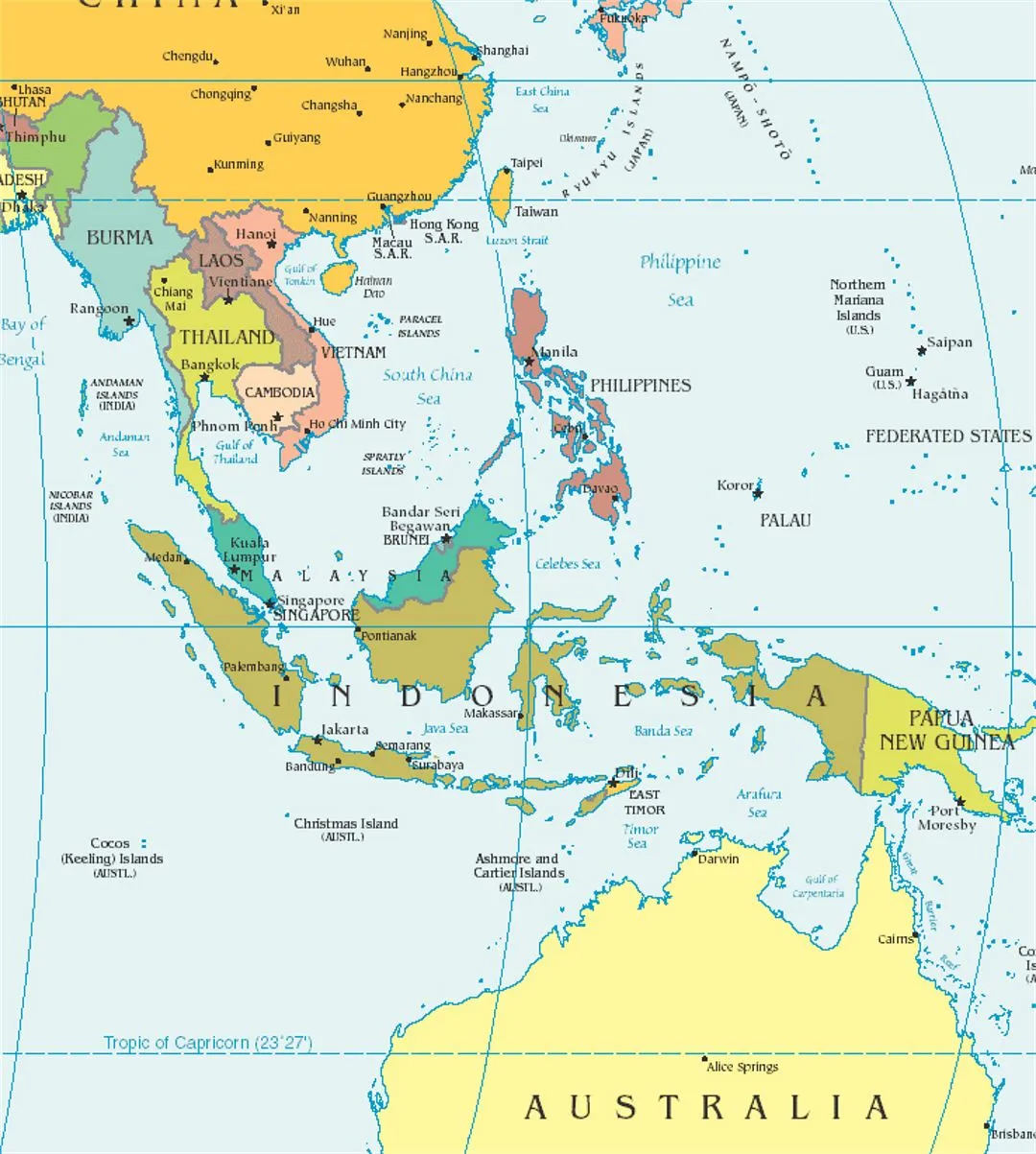 Photo: Southeast Asia, via www.mapsland.com
The Million-Dollar Miscalculation
In early 1943, Akron Surgical Supply Company received what seemed like a routine government contract: produce elastic bands for military field hospitals. The bands would secure bandages, organize medical instruments, and bundle supplies for transport to combat zones. Company executives saw dollar signs—a guaranteed government contract with premium wartime pricing.
 Photo: Akron Surgical Supply Company, via my.clevelandclinic.org
But someone misread the specifications. The contract called for 50,000 units of medical elastic bands. Akron's production manager interpreted "units" as individual bands rather than packages of bands. Instead of producing 50,000 packages containing 10 bands each (500,000 total bands), the factory cranked out 50 million individual rubber bands.
The mistake wasn't discovered until warehouses were overflowing with rubber bands—far more than every military hospital in the Pacific Theater could use in a decade. The government refused to pay for the overproduction, leaving Akron Surgical Supply with a warehouse full of "worthless" inventory and a company-threatening financial loss.
From Medical Waste to Marketing Genius
Faced with bankruptcy, Akron's executives made a desperate decision: sell the excess rubber bands to civilians. This was revolutionary thinking. Rubber bands had never been marketed to households because the price point made them impractical for everyday use. But with millions of bands already produced, Akron could sell them at unprecedented low prices and still recover their costs.
The company's marketing department, led by a former door-to-door salesman named Harold Mitchum, developed an ingenious strategy. Rather than selling rubber bands as single-purpose items, they pitched them as universal household solutions. Their advertisements promised that rubber bands could organize drawers, seal food containers, bundle newspapers, secure loose items, and solve dozens of daily annoyances.
Mitchum convinced five-and-dime stores across the Midwest to stock small packages of rubber bands near checkout counters—an early example of impulse purchase marketing. The bands were priced at just five cents for a package of twenty, making them affordable for any household budget.
The Accidental Household Revolution
American families discovered that cheap, readily available rubber bands were incredibly useful. Housewives used them to organize everything from kitchen utensils to sewing supplies. Children played games with them. Office workers adopted them for organizing paperwork. By 1945, rubber bands had become so common that most Americans couldn't remember life without them.
The success didn't go unnoticed by other manufacturers. Seeing Akron's profits, companies across the country began producing rubber bands for the civilian market. Competition drove prices even lower and availability even higher. What had been a medical specialty item became a commodity product found in every corner store.
The post-war economic boom accelerated adoption. Suburban families moving into new homes needed to organize their possessions, and rubber bands provided an cheap, versatile solution. The rise of home offices, craft hobbies, and DIY culture in the 1950s created even more demand.
The Humble Object That Organized America
By the 1960s, rubber bands had achieved something remarkable: they had become invisible through ubiquity. Every American household had them, but few people thought about where they came from or how they had become so common. They were simply part of the domestic landscape, as expected as salt shakers or can openers.
Today, Americans use approximately 30 billion rubber bands annually. They're so cheap and common that we barely notice them, yet modern life would be significantly more complicated without them. From organizing cables behind computer desks to securing bags of frozen vegetables, rubber bands have quietly woven themselves into the fabric of daily American life.
The irony is perfect: an invention that spent a century as an expensive curiosity became a household necessity because of a wartime manufacturing mistake. Sometimes the most useful innovations aren't the result of brilliant planning, but of happy accidents that force us to see familiar objects in completely new ways.
Akron Surgical Supply Company went out of business in 1967, but their accidental contribution to American domestic life lives on in every kitchen junk drawer across the country.