The Mail Crisis Nobody Talks About
Before 1653, sending a letter was like hiring a personal courier every single time. You either walked across town to hand-deliver your message, paid someone else to do it, or hoped a traveling merchant might carry it along their route. The idea that you could drop a letter in a box and trust strangers to deliver it? Absolutely ridiculous.
That's exactly what made Renouard de Villayer's proposal so revolutionary — and so threatening to 17th-century Parisians.
 Photo of Paris, via Wikidata/Wikimedia Commons
A Poet Versus the Postal Establishment
Villayer wasn't a postal worker or government official. He was a poet with a business problem. In 1653, he noticed that Paris had no reliable way for ordinary citizens to send letters across the city without paying outrageous courier fees or making the trip themselves.
His solution was audacious: install wooden boxes around Paris where people could deposit letters. For a small fee, mail carriers would collect these letters and deliver them anywhere in the city. He called it "petite poste" — little post.
The French government, surprisingly, said yes. They granted Villayer an official monopoly to operate his postal box system throughout Paris. On August 8, 1653, the first postal boxes appeared on street corners across the city.
When Innovation Meets Human Nature
Parisians reacted exactly how you'd expect people to react when someone disrupts their entire communication system: they lost their minds.
The established courier services saw Villayer's boxes as a direct threat to their livelihood. Private messengers who'd been charging premium rates for hand-delivery suddenly faced competition from a cheap, automated system that didn't require tipping or negotiation.
But the real problem wasn't economic — it was psychological. Parisians couldn't wrap their heads around trusting their private correspondence to an anonymous box on the street. What if someone stole their letters? What if the mail carriers read their personal messages? What if the whole system was just an elaborate scam?
Sabotage in the Streets
Within months, Villayer's postal boxes became targets. People stuffed them with garbage, dead animals, and even explosives designed to destroy letters inside. Competitors hired thugs to break the boxes or steal mail before official carriers could collect it.
The sabotage worked. By 1654, less than a year after launching, Villayer's system had collapsed. Parisians went back to their expensive couriers and personal delivery systems, convinced that postal boxes were a failed experiment.
Villayer died broke and forgotten, his revolutionary idea seemingly buried with him.
The Idea That Refused to Die
But concepts this useful don't stay buried forever. Over the next two centuries, various European cities quietly experimented with postal box systems. London tried it in the 1660s. German cities tested versions throughout the 1700s. Each time, the systems worked better as people gradually accepted the idea of trusting their mail to strangers.
By the 1800s, postal boxes had become standard across Europe. The same concept that terrified Parisians in 1653 was now considered essential infrastructure.
How America Fell in Love With the Mailbox
When postal boxes finally crossed the Atlantic in the mid-1800s, Americans embraced them immediately. Unlike Europeans, who had centuries of established courier traditions to overcome, Americans were building their communication systems from scratch.
The transcontinental railroad was connecting distant cities, the postal service was expanding rapidly, and American neighborhoods were spreading farther apart than European city centers. Postal boxes weren't just convenient for Americans — they were necessary.
By the 1890s, rural free delivery brought mail service directly to American homes, and suddenly every house needed its own personal postal box. The mounted mailbox became as essential to American homes as front doors or windows.
From Paris Streets to Suburban Driveways
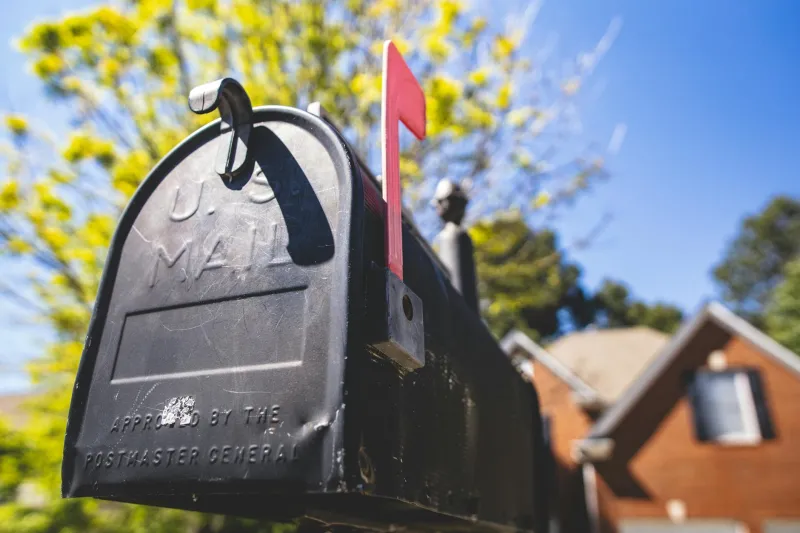
Today, more than 160 million American homes have mailboxes. That aluminum fixture at the end of your driveway traces its lineage directly back to Villayer's wooden boxes in 1653 Paris.
The irony is perfect: a French poet's idea that Parisians rejected so violently became one of the most distinctly American features of suburban life. Drive through any American neighborhood and you'll see rows of mailboxes that exist because a 17th-century poet thought there had to be a better way to send letters across town.
The Lesson in Every Mailbox
Villayer's story proves that revolutionary ideas often fail the first time — not because they're bad ideas, but because people aren't ready for them. Sometimes innovation requires not just a good concept, but the right cultural moment and the right audience.
Every time your mail carrier drops letters in your mailbox, you're participating in a system that took 200 years to travel from Paris street corners to American suburbs. That's the backstory behind one of the most mundane objects in American life: it started with a poet who dared to imagine that strangers might actually deliver your mail if you just trusted them enough to try.