The Jeweler's Obsession That Nobody Wanted
In 1912, Otto Rohwedder was a successful jeweler in Davenport, Iowa, with a comfortable life and a thriving business. But he had an idea that wouldn't leave him alone — a machine that could slice bread uniformly and wrap it automatically. To most people, this seemed like solving a problem that didn't exist. Bread was bread. You bought a loaf, you sliced it at home. What was the big deal?
Rohwedder sold his jewelry stores to fund his obsession, convinced he was onto something revolutionary. What followed was one of the most persistent — and initially unsuccessful — sales pitches in American business history.
Sixteen Years of "Thanks, But No Thanks"
For the next decade and a half, Rohwedder became a familiar figure to bakery owners across the Midwest. He'd roll up with his prototype machine, demonstrate how it could slice a loaf into perfect, uniform pieces, and explain how this would transform their business. The response was almost universally the same: polite interest followed by firm rejection.
The objections were reasonable. Sliced bread went stale faster than whole loaves. Customers were used to slicing their own bread — it was part of the daily routine. Most importantly, the machine was expensive, and bakeries weren't convinced anyone would pay extra for pre-sliced bread when they could slice it themselves for free.
Rohwedder's first prototype was destroyed in a fire in 1917, setting him back years. Undeterred, he rebuilt and refined his design, adding a wrapping mechanism to address the staleness problem. Still, the rejections continued. By the mid-1920s, friends and family were gently suggesting he give up and return to jewelry.
The Missouri Bakery That Said Yes
In 1928, Gustav Papendick, owner of the Chillicothe Baking Company in Missouri, finally agreed to give Rohwedder's machine a try. It wasn't enthusiasm that motivated him — it was desperation. His small-town bakery was struggling to compete with larger operations, and he figured he had little to lose.
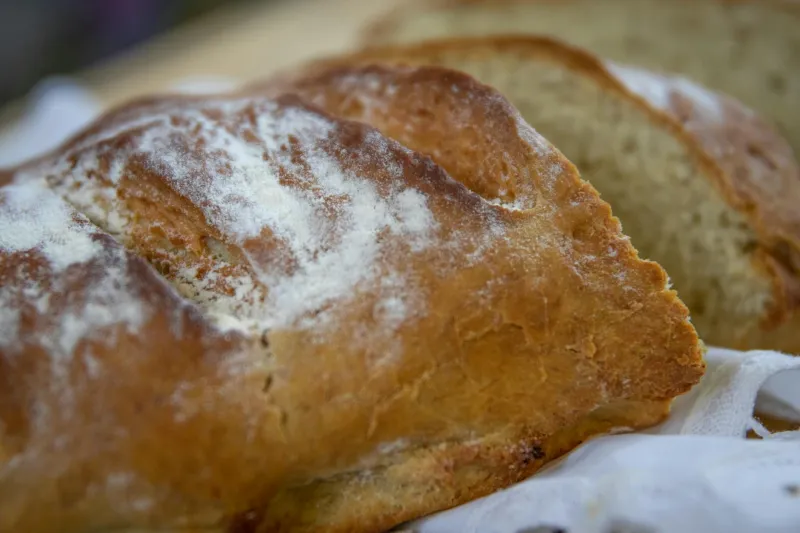
On July 7, 1928, the first commercially sliced bread rolled off Papendick's production line. The loaves were wrapped in wax paper to maintain freshness, with the slices held together by rubber bands. Local customers were initially skeptical, but convenience won out. Within weeks, demand for sliced bread was outstripping Papendick's ability to produce it.
The Domino Effect That Changed America
Word of Papendick's success spread quickly through the baking industry. Within two years, bakeries across the country were installing Rohwedder's machines or similar devices. The timing was perfect — America was becoming more urbanized, with more women entering the workforce and looking for ways to save time in the kitchen.
Sliced bread transformed not just breakfast routines but the entire sandwich industry. Suddenly, uniform slices made it easier to create consistent sandwiches, leading to the rise of commercial sandwich shops and eventually fast food. The simple act of pre-slicing bread had ripple effects throughout American food culture.
"The Greatest Thing Since..."
By the 1930s, sliced bread had become so ubiquitous that when something new and impressive came along, Americans started saying it was "the greatest thing since sliced bread." The phrase captured how revolutionary this simple innovation felt to people who remembered the before times.
The saying gained particular popularity during World War II, when the government briefly banned sliced bread in 1943 as part of wartime conservation efforts. The ban was supposed to save on the wax paper and metal parts used in slicing machines, but the public outcry was so intense that officials reversed the decision within three months. It remains one of the most unpopular wartime policies in American history.
The Persistence That Paid Off
Rohwedder's story illustrates something uniquely American — the belief that persistence and innovation can overcome any obstacle. He spent 16 years being told his idea was worthless, watching his savings dwindle and his reputation as a practical businessman evaporate. But he never stopped believing that people would embrace convenience once they experienced it.
Today, it's almost impossible to imagine American kitchens without sliced bread. The innovation that seemed so unnecessary in 1912 became so essential that banning it briefly during wartime felt like an attack on the American way of life.
The Accidental Revolutionary
Otto Rohwedder never set out to revolutionize American food culture. He was just a jeweler from Iowa who thought there might be a better way to slice bread. But his unwavering persistence in the face of constant rejection ultimately transformed how Americans eat, work, and think about convenience.
The next time you grab a slice of bread without thinking twice about it, remember Otto Rohwedder — the traveling salesman who refused to take no for an answer and accidentally gave America one of its most beloved innovations.