
Say it out loud: OK. You probably used it this morning before you finished your coffee. You've typed it thousands of times. You've said it to end conversations, start agreements, signal mild indifference, and express reluctant acceptance. It crosses every language barrier on earth — you'll hear it in Tokyo, Lagos, São Paulo, and Oslo without anyone needing a translation. "OK" is arguably the single most universally understood expression in human history.
So where did it come from? The answer is genuinely strange, involves a joke trend that lasted about a year, and got accidentally turbocharged by a presidential election campaign. It is, at its core, a very American accident.
Boston, 1839, and the Age of the Abbreviation Joke
To understand OK, you need to understand a particular flavor of humor that swept through American newspaper culture in the late 1830s. Editors and columnists — especially in Boston — developed a fondness for comedic abbreviations. The joke format was simple: take a phrase, deliberately misspell it, then abbreviate the misspelling. It sounds baffling now, but it was the viral content of its era.
For example, "No go" became "know go," abbreviated as KG. "All right" became "oll wright," abbreviated as OW. And on March 23, 1839, a writer at the Boston Morning Post used the phrase "all correct" — intentionally misspelled as "oll korrect" — and abbreviated it as OK.
That's it. That's the birth of OK. A throwaway gag in a regional newspaper.
Most of these abbreviation jokes faded immediately, which is what should have happened to OK. A few caught brief attention — "GT" (gone to Texas) had a short run, as did "OFM" (our first men) — but none of them survived. OK should have died in 1839 along with the rest of them. Instead, it got an unlikely second life from an unexpected source: American politics.
Old Kinderhook and the Campaign That Accidentally Saved a Word
In 1840, President Martin Van Buren was running for reelection. Van Buren was from Kinderhook, New York, a fact that had earned him the nickname "Old Kinderhook" throughout his political career. His supporters formed a campaign organization called the OK Club — the name playing on both the president's initials and his hometown abbreviation.
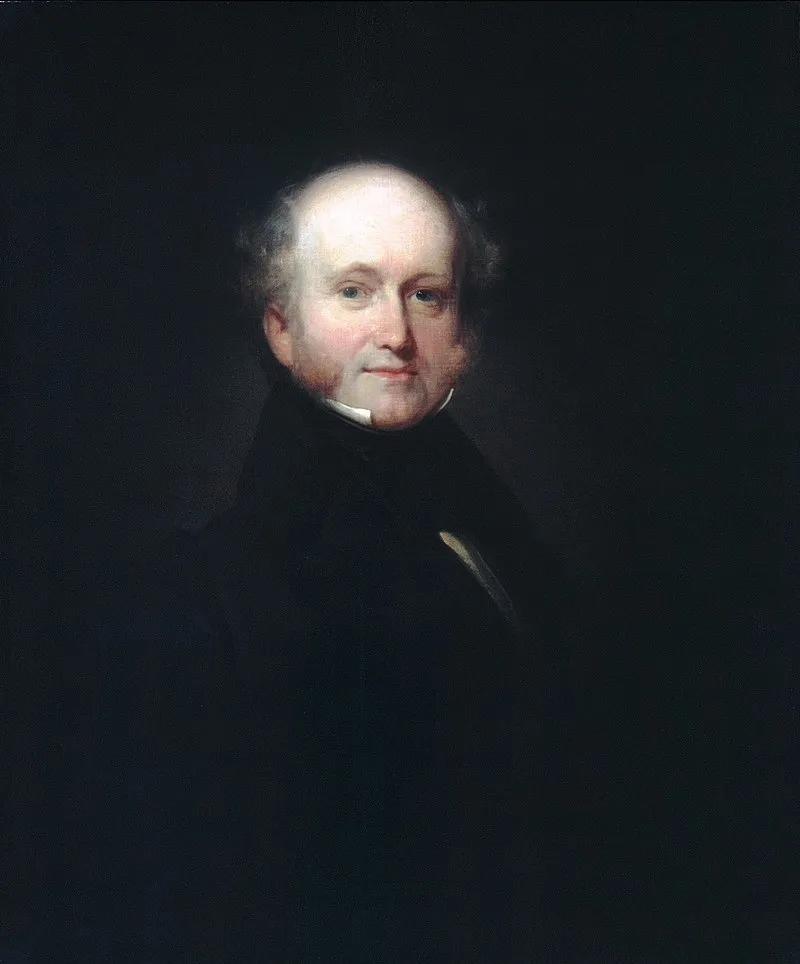 Photo of Martin Van Buren, via Wikidata/Wikimedia Commons
The club organized rallies, distributed materials, and generally made "OK" visible in newspapers and public discourse across the country. The word had, for the first time, national reach. And because it was already in circulation — thanks to that 1839 Boston joke — the two uses reinforced each other in the public mind. People who didn't follow Van Buren's campaign still encountered the letters; people who followed politics but had missed the Boston joke absorbed the abbreviation through campaign coverage.
Van Buren lost the election. But OK survived it.
The linguist Allan Metcalf, who literally wrote the book on the history of OK (OK: The Improbable Story of America's Greatest Word, published in 2011), traces this dual origin carefully — the Boston newspaper coinage and the Van Buren campaign amplification — as the twin engines that pushed OK past the graveyard where all the other abbreviation jokes went to die.
How OK Became the Universal Word
For the next several decades, OK spread slowly but steadily through American English. It showed up in telegrams, where brevity was essential and two-letter confirmations were practical. It appeared in newspaper headlines and business correspondence. By the late 19th century, it had crossed the Atlantic and begun embedding itself in British usage.
The 20th century accelerated everything. As American culture — movies, music, advertising, military communication, and eventually the internet — spread globally, OK traveled with it. The word required no translation because it carried almost no specific meaning: it was pure confirmation, a frictionless signal of agreement or acknowledgment that could be dropped into any language without disturbing the grammar around it.
Today, linguists estimate that "OK" is used in some form by speakers of virtually every major language on earth. It has adapted to local phonetics and spellings — okay, okey, okej, okê — but remains recognizable in all of them. No other word coined in American English has achieved anything close to that reach.
A Joke That Outlived Everything Around It
There's something almost poetic about the fact that the most globally recognized word in existence was born as a throwaway pun in a Boston newspaper that most people have never heard of. The writer who typed "oll korrect" almost certainly didn't think twice about it. Van Buren's campaign staff almost certainly weren't thinking about linguistics when they named the OK Club.
But the word slipped through the cracks of history and into the bloodstream of global communication — carried by coincidence, timing, and the strange momentum of American cultural influence.
Next time someone asks if you're ready and you say "OK," you're unknowingly quoting a bad joke from 1839 and a losing presidential campaign from 1840.
And somehow, that's fine.