The Prank That Became Universal Language
On March 23, 1839, a Boston newspaper editor made what he thought was a throwaway joke. Writing about a satirical organization called the "Anti-Bell-Ringing Society," he noted that the group's members were "o.k. (all correct)" in their opposition to unnecessary bell-ringing around Boston.
The editor was Charles Gordon Greene of the Boston Morning Post, and he was participating in a brief 1830s fad for intentionally misspelled abbreviations. Just as today's internet users might write "ur" for "your," Greene and his contemporaries delighted in creating fake acronyms from deliberately butchered phrases. "O.K." stood for "oll korrect" — a joking misspelling of "all correct."
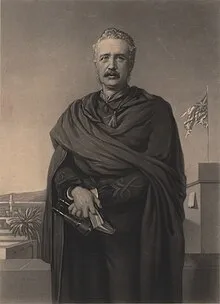 Photo: Charles Gordon Greene, via upload.wikimedia.org
Greene assumed his little linguistic prank would be forgotten within weeks. Instead, he had accidentally created the most recognized word in human history.
The Abbreviation Wars of the 1830s
To understand how "OK" emerged, you need to picture 1830s America as a place where newspaper editors had way too much time on their hands and a peculiar sense of humor. The country was experiencing a fad for humorous abbreviations that would make modern texting culture seem restrained.
Editors competed to create the most ridiculous acronyms possible. "N.G." meant "no go." "G.T.D.H.D." stood for "give the devil his due." "O.F.M." was "our first men." Most of these abbreviations were intentionally misspelled for comic effect: "K.Y." for "know yuse" (no use), "K.G." for "know go" (no go).
The fad was part of a broader American fascination with wordplay and linguistic innovation. This was the era when Americans were consciously trying to distinguish their language from British English, creating distinctly American slang and expressions.
"OK" fit perfectly into this trend, but it had one crucial advantage: it was short, memorable, and phonetically satisfying to say. While other abbreviations of the era were clunky or hard to pronounce, "OK" rolled off the tongue naturally.
How Politics Saved a Dying Word
By 1840, the abbreviation fad was fading, and "OK" seemed destined to join dozens of other forgotten acronyms in linguistic history. Then American politics intervened in the most unexpected way.
Martin Van Buren, running for re-election as president, had grown up in Kinderhook, New York, earning him the nickname "Old Kinderhook." His supporters formed Democratic clubs called "O.K. Clubs," playing on both Van Buren's nickname and the recent "all correct" abbreviation.
Suddenly, "OK" was everywhere. Campaign rallies featured "O.K." banners. Political newspapers wrote about "O.K. meetings." Van Buren's opponents tried to turn the acronym against him, claiming "O.K." actually stood for "Out of Kash" or "Orful Katastrophe."
Van Buren lost the election, but "OK" had gained something invaluable: widespread recognition beyond Boston's newspaper circles. The political campaign had accidentally transformed a regional joke into a national phenomenon.
The Telegraph's Accidental Endorsement
Even with political fame, "OK" might have remained a curious footnote in American slang. What truly secured its future was the rise of telegraph technology in the 1840s and 1850s.
Telegraph operators needed a quick, unmistakable way to confirm that messages had been received correctly. "OK" was perfect: short (saving money on transmission costs), phonetically distinct (unlikely to be misheard), and already familiar to many Americans.
As telegraph lines spread across the country, "OK" became the standard acknowledgment signal. Railroad operators used it to confirm train schedules. Military commanders used it for battlefield communications. Business owners used it to verify commercial transactions.
The telegraph transformed "OK" from slang into infrastructure. It was no longer just a word — it was a critical piece of America's communication system.
When Alexander Graham Bell Made It Permanent
The telephone nearly killed "OK" before making it immortal. When Alexander Graham Bell demonstrated his new invention in the 1870s, he initially promoted "ahoy" as the standard telephone greeting, following maritime tradition.
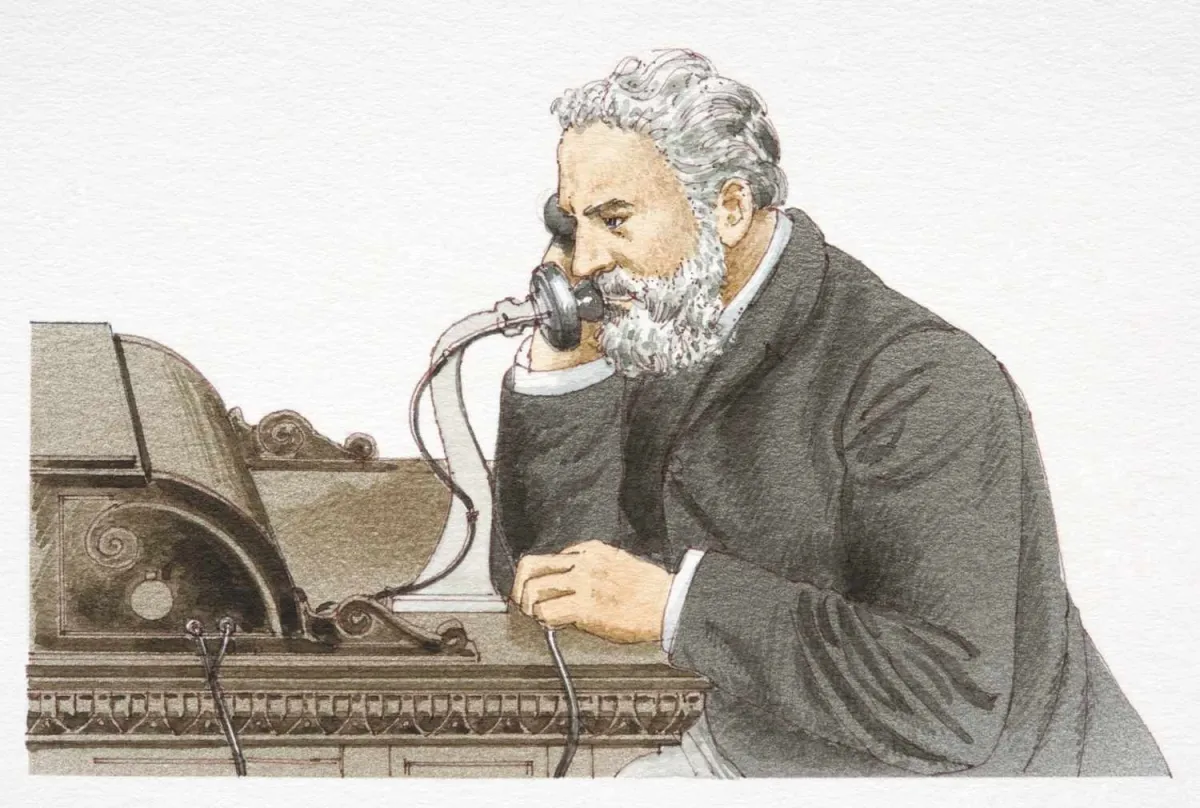 Photo: Alexander Graham Bell, via www.thoughtco.com
Thomas Edison had other ideas. He pushed for "hello" as a telephone greeting, and "OK" as the standard way to acknowledge understanding during phone conversations. Edison's approach won out, partly because "OK" was already familiar to telegraph operators who were among the first telephone users.
As telephones spread across America, "OK" became embedded in millions of daily conversations. Unlike the telegraph, which required specialized operators, telephones put "OK" directly into the mouths of ordinary Americans. The word's frequency of use exploded.
By 1900, "OK" had achieved something remarkable: it was simultaneously informal enough for casual conversation and formal enough for business communications. It worked equally well in spoken and written contexts, bridging gaps between different social classes and regions.
The Global Takeover
World War II accelerated "OK's" global spread as American soldiers carried the word to every continent. Unlike other American slang that required cultural context to understand, "OK" was immediately useful to anyone who needed to signal agreement or acknowledgment.
The word proved remarkably adaptable to other languages. It could be pronounced easily by speakers of almost any language, and its meaning was so basic — agreement, acknowledgment, acceptance — that it translated across cultural boundaries without explanation.
By the 1950s, "OK" was appearing in languages worldwide, often without translation or adaptation. French speakers said "OK." German speakers said "OK." Japanese speakers said "OK." The word had become truly universal.
The Accidental Genius of Simplicity
What made "OK" successful wasn't clever marketing or institutional support — it was accidental linguistic perfection. The word filled a gap that humans didn't even realize existed: the need for a quick, neutral way to signal understanding without enthusiasm or strong emotion.
"Yes" implies agreement with content. "Fine" suggests reluctant acceptance. "Good" indicates positive evaluation. But "OK" simply acknowledges receipt of information and willingness to proceed. It's emotionally neutral while functionally essential.
This neutrality made "OK" invaluable in an increasingly complex world. As societies became more bureaucratic, more technological, and more interconnected, people needed a word that could facilitate communication without adding emotional baggage.
From Joke to Institution
Today, "OK" appears in virtually every human language and serves as humanity's closest thing to universal vocabulary. It's recognized by more people than any other English word, used billions of times daily, and embedded so deeply in global communication that most speakers don't even think of it as English anymore.
Charles Gordon Greene's throwaway newspaper joke had accidentally solved one of humanity's oldest communication challenges: how to quickly signal understanding across cultural and linguistic boundaries. In creating "OK," he had given the world its most useful word — even if he never lived to see it happen.
The next time you say "OK," remember: you're participating in a linguistic miracle that began as a Boston editor's attempt at humor and became humanity's default way of saying "I understand, and we can move forward together." Not bad for a two-letter joke.