The Sweet Accident That Changed Everything
Percy Spencer was having a perfectly ordinary day at Raytheon's lab in 1945 when he noticed something odd. The chocolate bar in his pocket had turned into a gooey mess while he worked on a new radar system called the magnetron. Most people would have cursed their ruined snack and moved on. Spencer got curious.
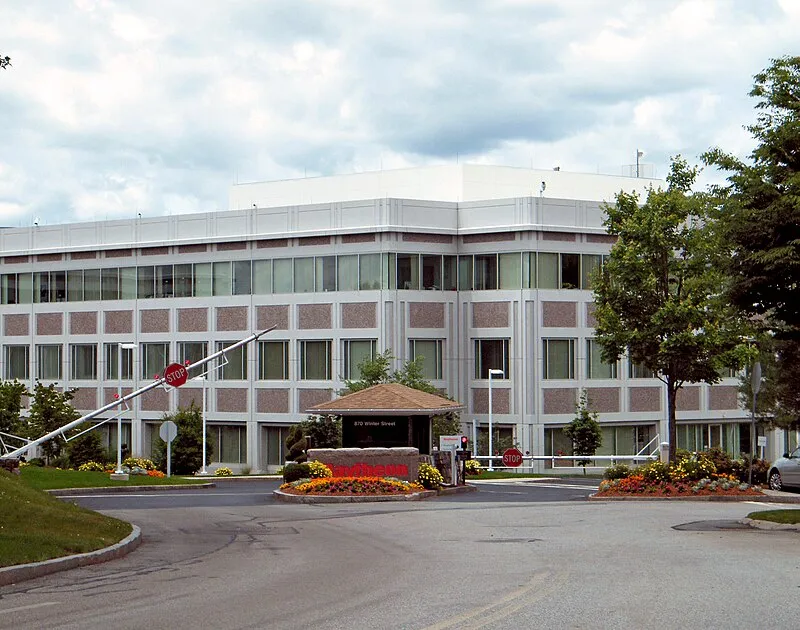 Photo of Raytheon, via Wikidata/Wikimedia Commons
The 50-year-old engineer had dropped out of school at 12 and taught himself electronics by reading textbooks at night. His unconventional mind saw opportunity where others saw inconvenience. If radar waves could melt chocolate, what else could they do?
From Battlefield to Breakfast Table
The magnetron Spencer was testing had been crucial to winning World War II. These powerful vacuum tubes generated microwaves that helped Allied radar systems detect enemy aircraft with unprecedented accuracy. By 1945, with the war ending, Raytheon was looking for peacetime applications for their military technology.
Spencer's melted chocolate became the first clue. He brought popcorn kernels to the lab the next day and watched them pop in seconds when exposed to microwave radiation. Then came an egg, which exploded spectacularly when a colleague got too close during the experiment.
The pattern was clear: microwaves could cook food from the inside out, heating water molecules directly rather than relying on external heat sources like traditional ovens.
The Refrigerator-Sized Monster
Raytheon's first microwave oven, the "Radarange," hit the market in 1947. Calling it a kitchen appliance was generous. The beast stood six feet tall, weighed 750 pounds, and cost $5,000 – about $60,000 in today's money. It required special plumbing for water cooling and consumed as much electricity as a small factory.
Restaurants and industrial kitchens were the only customers who could afford and accommodate these hulking machines. The idea of every American family owning one seemed absurd.
America's Skeptical Reception
Even when Raytheon managed to shrink the technology into smaller units throughout the 1950s, American families remained deeply suspicious. The association with radar and atomic energy made people nervous about "radioactive" food. Housewives worried the mysterious waves would drain nutrients or create dangerous chemicals.
Food cooked in early microwaves often emerged soggy, unevenly heated, or strangely textured. Traditional cooking methods had been perfected over centuries – why abandon them for this space-age contraption that made everything taste like cafeteria food?
The Countertop Breakthrough
The turning point came in 1967 when Amana, a Raytheon subsidiary, introduced the first countertop microwave oven. At $495, it was still expensive, but finally within reach of middle-class families. More importantly, it fit in a normal kitchen.
Amana marketed the device not as a replacement for conventional cooking, but as a time-saving supplement. Working mothers could defrost frozen dinners in minutes instead of hours. Leftovers could be reheated without firing up the full oven. Coffee could be warmed instantly.
The Convenience Revolution
By the 1970s, America was ready to embrace convenience. More women were entering the workforce, creating demand for faster meal preparation. The frozen food industry exploded, designing products specifically for microwave cooking. TV dinners evolved from aluminum trays to microwaveable packaging.
The microwave's rise coincided with broader changes in American life. Families spent less time around dinner tables and more time juggling busy schedules. The appliance that could reheat pizza at midnight or cook a baked potato in four minutes fit perfectly into this new lifestyle.
Rewiring Domestic Life
By 1986, more American homes had microwave ovens than dishwashers. The technology that began as a military secret had become more common than many traditional appliances. Spencer's accidental discovery had fundamentally altered how Americans thought about cooking.
The microwave didn't just change what people ate – it changed when and how they ate. Meal planning became less rigid. Individual family members could heat their own portions at different times. The synchronized family dinner, already under pressure from modern life, faced a new challenge from an appliance that made coordination unnecessary.
The Everyday Miracle
Today, over 90% of American households own a microwave oven. We use them so routinely that it's easy to forget how revolutionary they once seemed. That familiar humming sound and spinning plate represent one of the most successful transitions from military to civilian technology in American history.
Percy Spencer, who held 300 patents by the time he died in 1970, lived to see his accidental discovery transform American kitchens. The chocolate bar that melted in his pocket launched an industry worth billions and changed how a nation eats dinner.
Every time someone reheats coffee or defrosts ground beef in seconds, they're benefiting from a moment of wartime serendipity that nobody saw coming – proof that the most useful innovations often emerge from the most unexpected places.