
The Unlikely Father of Rock and Roll
In 1950, professional guitarists took one look at Leo Fender's latest creation and laughed. The Telecaster—originally called the Broadcaster—looked nothing like the elegant archtop guitars that serious musicians preferred. It was a simple slab of wood with basic electronics, mass-produced in a California factory by a man who couldn't even tune a guitar properly.
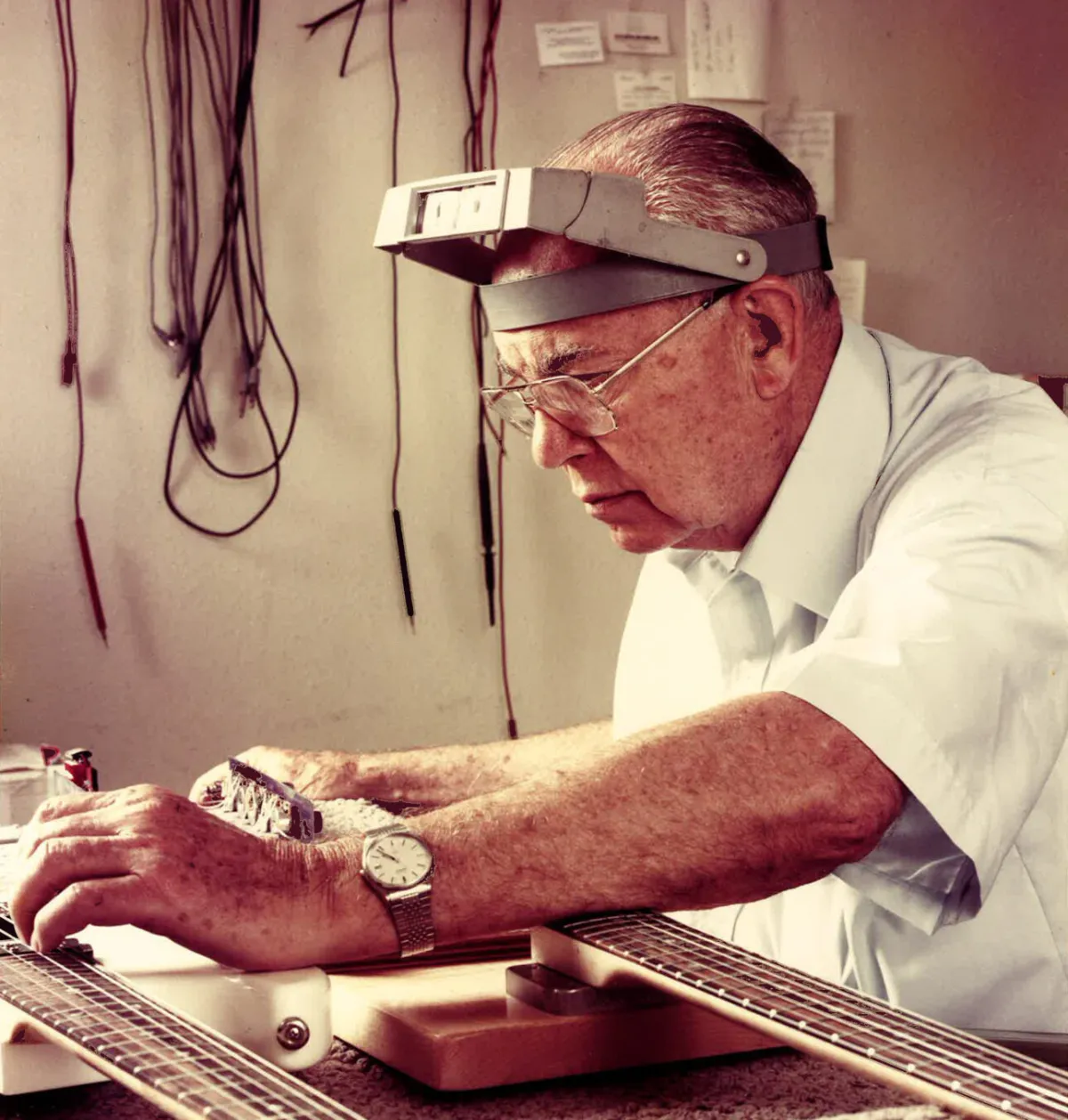 Photo: Leo Fender, via static.spin.com
What those musicians didn't realize was that they were staring at the future of American music.
Leo Fender was a radio repairman from Fullerton, California, who stumbled into guitar-making almost by accident. In the 1940s, local country and western musicians would bring their amplified guitars to his repair shop when the electronics failed. Fender noticed the same problems kept recurring: the instruments were fragile, expensive to fix, and nearly impossible to mass-produce consistently.
 Photo: Fullerton, California, via cdn-assets.alltrails.com
From Radio Parts to Rock Revolution
Fender's background in radio electronics gave him a completely different perspective than traditional guitar makers. While craftsmen like Gibson focused on carved wooden bodies and complex construction techniques, Fender thought like an engineer. Why not build guitars the same way you'd build a radio—with standardized parts that could be easily replaced?
His first breakthrough came with the Telecaster in 1950. Instead of a hollow wooden body that required skilled carving, Fender used a solid piece of ash or alder that could be cut with basic woodworking tools. The neck bolted on rather than being glued, making repairs simple. Most revolutionary of all, every component was designed for factory production.
Professional musicians were horrified. "It looks like a canoe paddle," one jazz guitarist complained. The instrument felt cheap compared to hand-carved Gibson guitars that cost twice as much. But Fender wasn't targeting jazz musicians or classical players—he was building instruments for working musicians who needed reliable, affordable tools.
The Sound That Changed Everything
What nobody expected was how different these guitars would sound. The solid body eliminated feedback issues that plagued hollow guitars when amplified. The simple pickup design produced a bright, cutting tone that could slice through a full band. Most importantly, when pushed through a loud amplifier, the Telecaster could sustain notes longer and distort in musical ways that traditional guitars couldn't match.
Country musicians were the first to embrace Fender's instruments. Players like Jimmy Bryant and Speedy West discovered they could create sounds—bending notes, using tremolo, achieving controlled feedback—that simply weren't possible with conventional guitars. By the mid-1950s, a new generation of players was emerging who had learned on Fender instruments and thought of them as the standard, not the exception.
Elvis, Hendrix, and the Mass Market Revolution
The real cultural shift came when rock and roll exploded in the mid-1950s. Elvis Presley's guitarist Scotty Moore played a Gibson, but countless other early rock musicians picked up affordable Fender Telecasters and Stratocasters. The instruments were perfect for the new music—loud, aggressive, and capable of sounds that would have been considered defects on jazz guitars.
By the 1960s, Fender had completely transformed American music culture. Jimi Hendrix's psychedelic explorations were built on a foundation of Fender Stratocaster feedback and distortion. Country music adopted the bright Telecaster sound as its signature tone. Even folk musicians like Bob Dylan shocked audiences by "going electric" with Fender instruments.
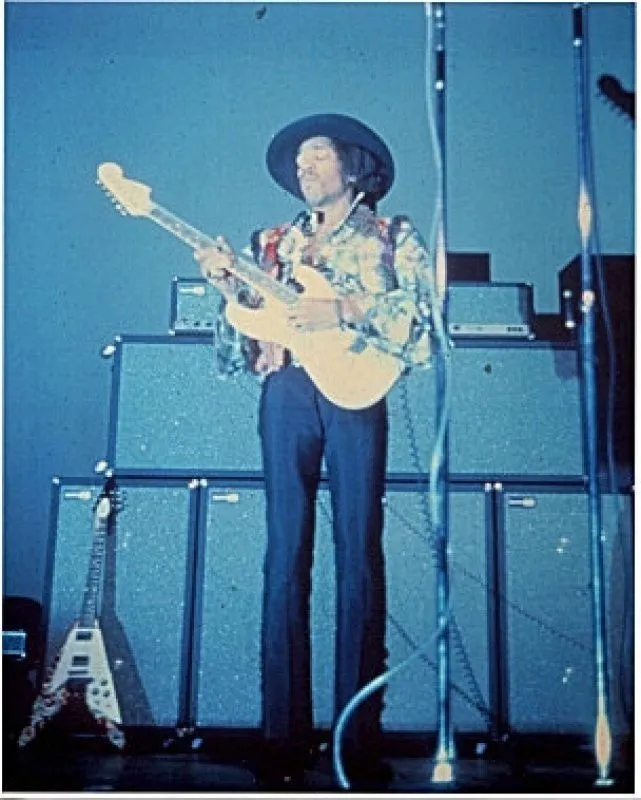 Photo: Jimi Hendrix, via i.pinimg.com
The mass-production approach that professional musicians had initially scorned became the industry standard. Suddenly, high-quality electric guitars were accessible to teenagers across America. Garage bands could afford the same basic instruments their heroes played on records. This democratization of music-making helped fuel everything from surf rock to punk to grunge.
The Accidental Cultural Revolution
Leo Fender sold his company to CBS in 1965 for $13 million, but his impact on American culture was just beginning. The simple, mass-producible electric guitar had become the sonic signature of American popular music. From Motown to metal, country to alternative rock, the sounds that defined American music for the next fifty years were largely shaped by instruments designed by a radio repairman who never learned to play them.
Today, Fender guitars are as iconic as Coca-Cola or McDonald's—symbols of American innovation exported worldwide. Yet it all started with a practical problem: how to build a better, cheaper guitar for working musicians. Sometimes the most revolutionary changes come not from visionaries trying to change the world, but from practical people trying to solve everyday problems.
Leo Fender's legacy isn't just in the instruments themselves, but in proving that mass production and accessibility could create culture rather than destroy it. His "cheap" guitars didn't replace artisanal craftsmanship—they created an entirely new category of music that never could have existed without them.