Blue Jeans Were Never Supposed to Be Cool — Here's How They Took Over America Anyway
There's a pair of jeans somewhere in your home right now. Maybe you're wearing them. Maybe they're folded in a drawer or piled on a chair in that specific way jeans tend to accumulate. They're so normal, so baseline American, that it's almost impossible to imagine a time when wearing denim to work was considered a form of rebellion.
But that time existed. And the journey from 'pants for miners' to 'acceptable in most restaurants' took over a century of cultural negotiation, a few Hollywood icons, and one of the more unusual corporate marketing campaigns of the 1990s.
The Original Problem Levi Strauss Was Trying to Solve
In 1853, Levi Strauss arrived in San Francisco from New York, carrying dry goods to sell to the miners flooding into California for the Gold Rush. He wasn't trying to invent an iconic garment. He was trying to make a living.
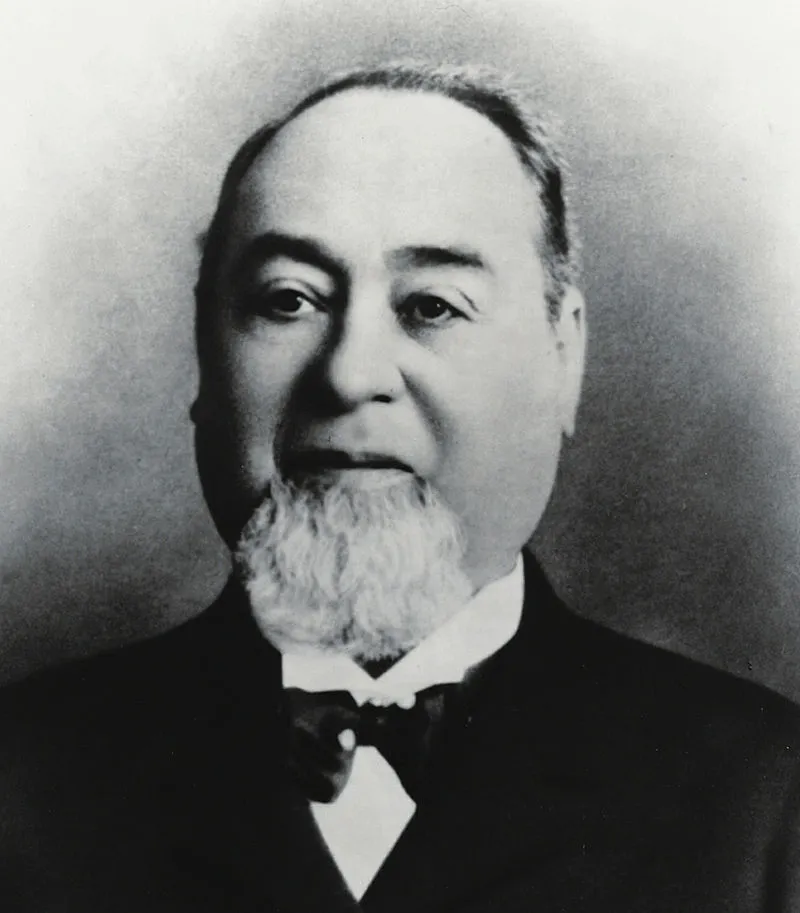 Photo of Levi Strauss, via Wikidata/Wikimedia Commons
A few years later, in 1873, Strauss partnered with a Nevada tailor named Jacob Davis, who had figured out a useful trick: adding copper rivets at the stress points of work pants — the pocket corners, the base of the fly — to keep them from tearing apart under heavy use. Davis didn't have the money to patent the idea himself, so he wrote to Strauss and proposed a partnership. On May 20, 1873, they received U.S. Patent No. 139,121, and the first riveted denim work pants went into production.
They were called 'waist overalls.' They were stiff, dark blue, and built for punishment. The miners, farmers, and railroad workers who bought them weren't thinking about fashion. They needed pants that wouldn't disintegrate before payday.
For the next several decades, that's exactly what denim was: functional clothing for people who worked with their hands. It had no social cachet, no cultural meaning beyond utility. Wearing jeans marked you as someone who did manual labor, which in the rigid class signaling of the late 19th and early 20th centuries was not a look most people aspired to.
World War II and the Accident of Scarcity
The war changed a lot of things, and denim's cultural trajectory was one of them. During World War II, jeans were designated as essential workwear and made available only to defense industry workers. That scarcity created something unexpected: demand.
When American soldiers and workers traveled abroad — and when foreign workers and civilians got access to American goods through military exchanges and post-war trade — denim took on a new meaning. It became associated with America itself: rugged, practical, free. European teenagers who got their hands on a pair of Levi's in the late 1940s and early 1950s weren't thinking about mining. They were wearing a piece of American mythology.
Back home, the mythology was being written in real time, and Hollywood was holding the pen.
The Rebel in the Denim
The moment that permanently altered denim's cultural status is easy to pinpoint: 1955. That's when James Dean appeared in Rebel Without a Cause, wearing jeans, a white t-shirt, and a red jacket, leaning against a car with the specific energy of someone who did not care what you thought about his outfit. Marlon Brando had done something similar in The Wild One two years earlier.
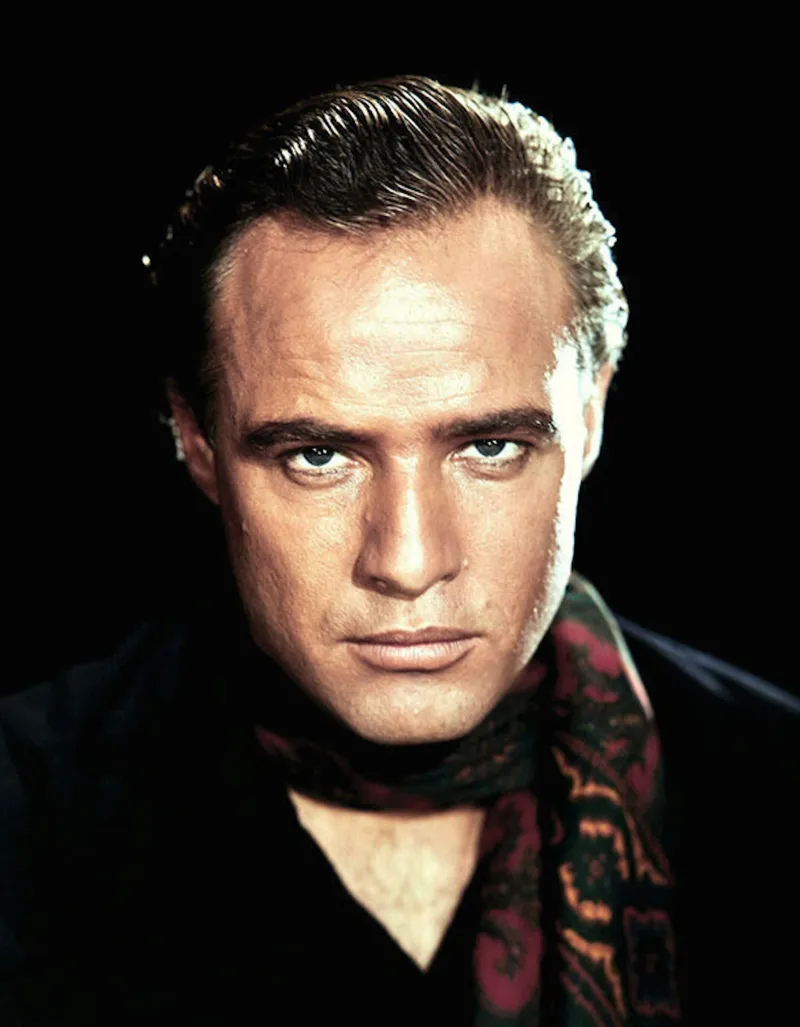 Photo of Marlon Brando, via Wikidata/Wikimedia Commons
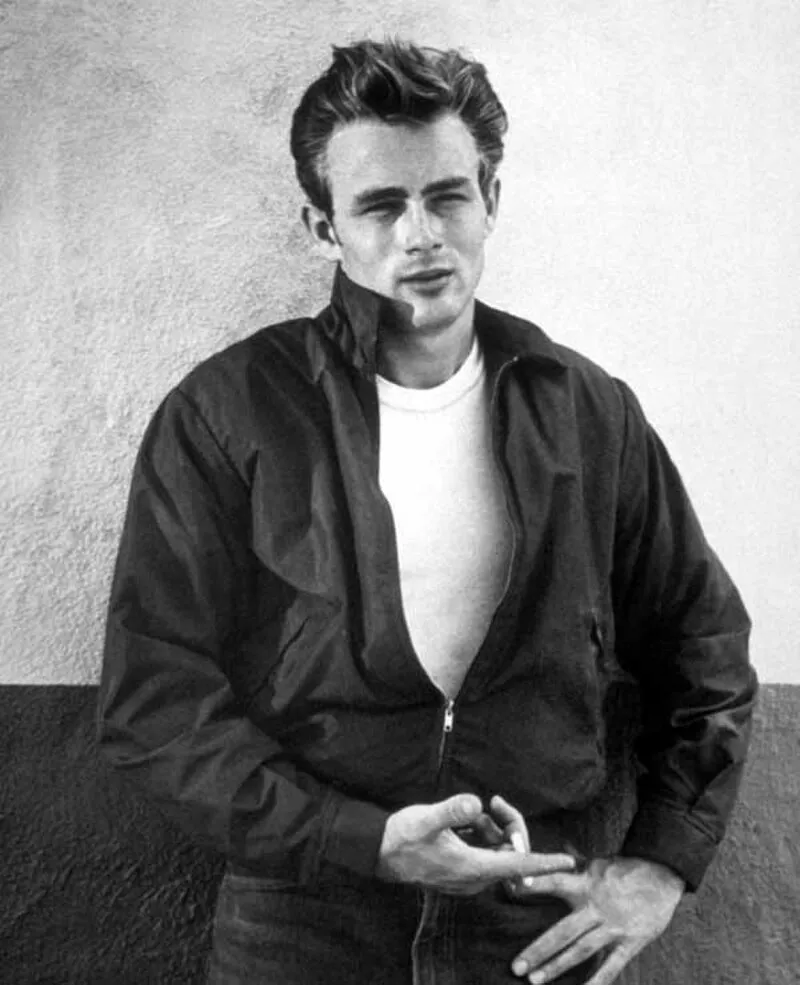 Photo of James Dean, via Wikidata/Wikimedia Commons
Suddenly, jeans weren't workwear. They were a statement. They said something about who you were — or at least who you wanted to be. The connection between denim and rebellion, between jeans and youth, was sealed almost overnight.
Schools responded by banning them. Parents objected. Which, of course, only made teenagers want them more.
Through the 1960s and 1970s, jeans evolved from teenage rebellion into full counterculture uniform. They were patched, embroidered, bell-bottomed, and tie-dyed. By the time the 1980s arrived, designer denim had turned the whole thing upside down: the pants that started as cheap workwear were now being sold at premium prices with designer labels. Calvin Klein ran ads that were considered scandalous. Gloria Vanderbilt put her signature on the back pocket. Denim had gone from the mine shaft to the runway.
But the office was still holding out.
The Hawaiian Shirt Campaign Nobody Talks About
For most of the 20th century, corporate America maintained a clear line: jeans were not appropriate for the workplace. Suits and ties were the standard, and even as dress codes relaxed through the 1980s, denim remained on the wrong side of the professional divide.
The crack in that wall came from an unlikely direction. In 1992, the Hawaii Fashion Industry and the garment industry launched a campaign called 'Aloha Friday,' encouraging companies to let employees dress casually on Fridays as a way to boost morale and — not incidentally — sell more casual clothing. The campaign found receptive ears on the mainland, and through the early 1990s, the concept of 'Casual Friday' began spreading through American corporations.
Levi Strauss & Co. saw the opportunity immediately. They launched their own corporate campaign promoting 'casual business wear,' helpfully distributing pamphlets to HR departments across the country explaining how to implement a casual dress policy. Those pamphlets, not coincidentally, featured a lot of denim.
By the mid-1990s, Casual Friday had become a genuine American workplace institution. And once people were wearing jeans one day a week, the logic of the other four days became harder to defend. The boundary kept moving.
The Normalization That Levi Strauss Couldn't Have Imagined
Today, denim is so embedded in American casual culture that many workplaces don't bother specifying it at all. The tech industry essentially abolished dress codes entirely, and 'business casual' in most American offices now means whatever you feel comfortable in, jeans included.
Levi Strauss's original copper-riveted work pants have become, somehow, the default garment of American leisure. The clothing designed to be worn into a mine is now what you wear to brunch, to a casual dinner, to the office on any day of the week depending on where you work.
The miners who wore the originals would find the whole thing pretty confusing. The teenagers who fought for the right to wear them in the 1950s would probably feel vindicated. And somewhere in the middle of all that history is a simple pair of pants that never stopped reinventing what it means to dress like an American.