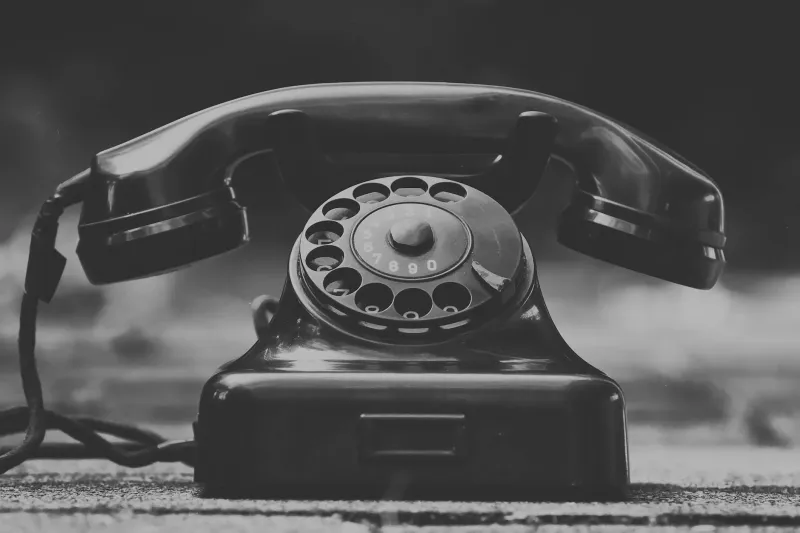
The Word That Didn't Exist Until It Had To
Every day, millions of Americans answer their phones with a simple "hello." It feels natural, automatic, like humans have always greeted each other this way. But before 1877, "hello" was barely a word at all—just a loose variation of hunting calls, expressions of surprise, and the kind of noise you might make when trying to get someone's attention across a crowded room.
 Photo of America, via Wikidata/Wikimedia Commons
The transformation of this throwaway sound into America's default greeting happened because of a corporate disagreement between two of history's most famous inventors. Their argument over telephone etiquette didn't just change how Americans answered calls—it quietly rewired the social fabric of human interaction.
When Phones Had No Rules
Alexander Graham Bell's telephone arrived in 1876 without an instruction manual for social interaction. Nobody knew how to begin or end conversations through this strange new device. The whole concept of talking to someone you couldn't see, through a wire, felt unnatural and awkward.
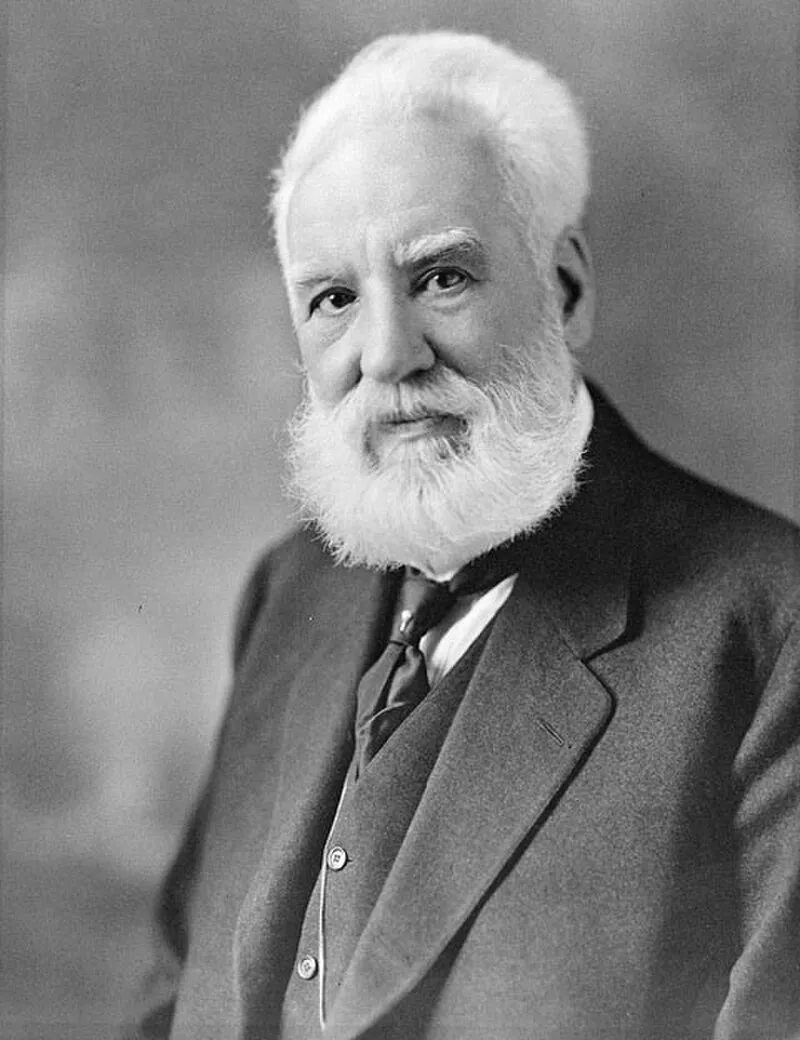 Photo of Alexander Graham Bell, via Wikidata/Wikimedia Commons
Bell himself had strong opinions about proper telephone behavior. Drawing from his experience with maritime communication, he insisted that people should answer calls by saying "Ahoy!"—the same greeting ships used when hailing each other at sea.
"Ahoy" made perfect sense to Bell. It was loud, clear, and designed to carry across distances. Naval officers had used it for centuries to establish contact with other vessels. If it worked on the ocean, Bell reasoned, it would work on the telephone network he was building across America.
For the first year of telephone service, "Ahoy" was the official greeting recommended by Bell's company. Telephone operators were trained to say "Ahoy" when connecting calls, and early phone users dutifully followed suit.
Edison's Alternative Vision
Thomas Edison had different ideas. As Bell's primary competitor in the early telephone industry, Edison was developing his own phone systems and establishing his own rules for proper usage.
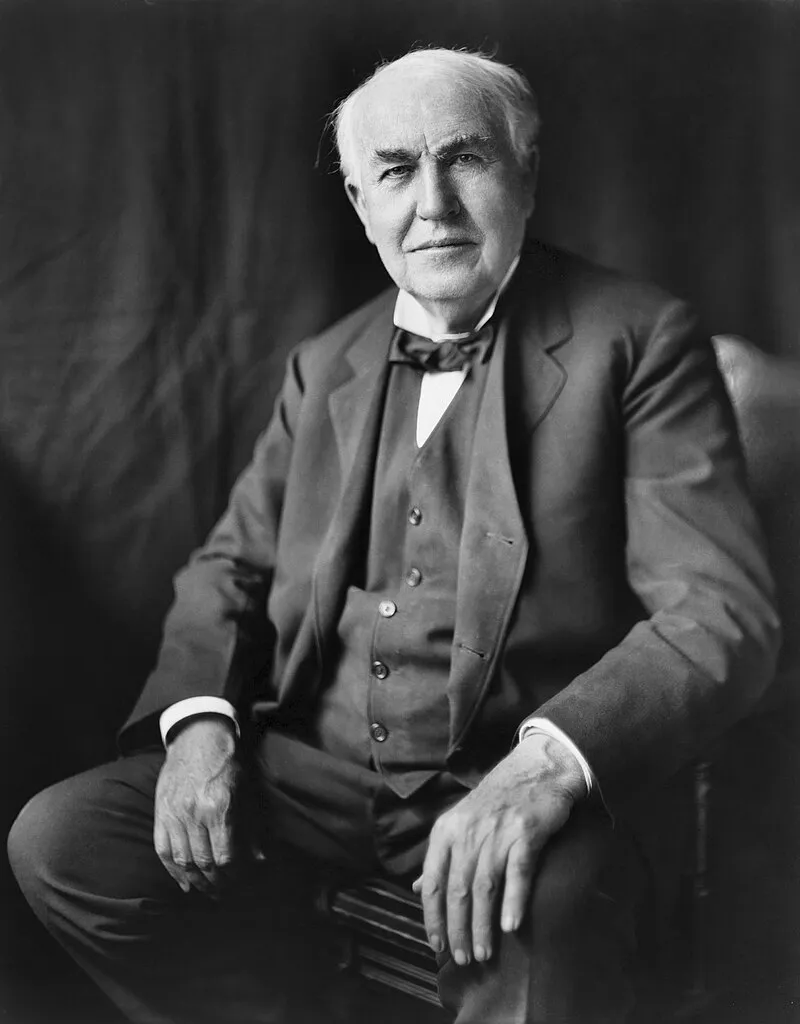 Photo of Thomas Edison, via Wikidata/Wikimedia Commons
Edison thought "Ahoy" sounded ridiculous for everyday conversation. Americans weren't sailors, and their telephone calls weren't maritime emergencies. He advocated for something more natural, more conversational, more... American.
Edison's choice was "Hello." At the time, it wasn't really a greeting—more like an exclamation of surprise or a way to get someone's attention. People might say "Hello!" when they encountered something unexpected, similar to how we might say "Whoa!" or "Hey!" today.
But Edison saw potential in the word's flexibility. "Hello" was short enough to transmit clearly over poor telephone connections. It was distinctly American rather than borrowed from maritime tradition. And it had an informal, friendly quality that matched Edison's vision of the telephone as a tool for casual communication, not just business or emergencies.
The Battle for America's Voice
What followed was one of history's strangest corporate battles. Bell and Edison weren't just competing over telephone technology—they were fighting to determine how Americans would greet each other for generations to come.
Bell's telephone company continued promoting "Ahoy" through advertising, operator training, and user guides. They printed instruction cards showing proper "Ahoy" technique and distributed them with every new telephone installation.
Edison's company countered with aggressive promotion of "Hello." Edison personally wrote articles for popular magazines explaining why "Hello" was superior. He argued that "Ahoy" was pretentious and impractical for American families who just wanted to chat with neighbors or check in with relatives.
The debate played out in newspapers across the country. Editorial writers took sides, society columnists offered opinions, and ordinary Americans found themselves choosing teams in a linguistic battle they never asked to join.
How Edison Won Without Trying
Edison's victory came through an unexpected channel: telephone operators. While company executives argued about official policy, the women who actually connected calls were making the decision in real time, hundreds of times per day.
Telephone operators quickly discovered that "Hello" worked better than "Ahoy" for practical reasons. "Hello" was easier to say quickly, less likely to be misheard over static-filled connections, and more natural for rapid-fire conversations with multiple callers.
By 1880, most telephone operators had quietly switched to "Hello" regardless of their company's official position. Since operators were often the first voice callers heard, their preference shaped public behavior more than any corporate policy could.
Bell himself eventually surrendered. In a private letter to his wife in 1880, he admitted that "Hello" had become "the standard telephone greeting" despite his best efforts to promote "Ahoy." He stopped fighting the trend and began using "Hello" in his own telephone conversations.
The Greeting That Conquered the World
Once "Hello" established itself as America's telephone greeting, its influence spread far beyond phone conversations. Americans began using "Hello" as a general greeting in face-to-face interactions, letters, and eventually email and text messages.
The word's telephone origins gave it a modern, technological feeling that appealed to a country rapidly embracing new inventions. Saying "Hello" marked you as someone comfortable with progress, someone who understood how to navigate the modern world.
By 1900, "Hello" had become so standard that most Americans couldn't remember ever greeting people any other way. The word appeared in popular songs, advertising slogans, and everyday conversation with a frequency that would have been impossible to imagine just twenty years earlier.
The Accident That Changed Everything
Looking back, it's remarkable how a corporate disagreement between two inventors accidentally rewired human social interaction. Neither Bell nor Edison set out to change how people greet each other—they were just trying to solve a practical problem about telephone etiquette.
But their argument created something much larger: proof that new technologies don't just change what we do, they change who we are. The telephone didn't just enable long-distance conversation—it gave Americans a new way to present themselves to the world.
Today, "Hello" is so universal that we use it in dozens of languages and contexts Bell and Edison never imagined. Every time you answer your phone, start a video call, or greet a stranger, you're participating in the legacy of their 19th-century corporate dispute.
That simple word carries the DNA of America's first technology boom—a time when inventors were racing to build the future, one conversation at a time.