The American road trip is woven into the national mythology so tightly it barely feels like a choice anymore — it feels like a right. Route 66. The Pacific Coast Highway. A cooler in the back seat, a playlist on the phone, and the particular pleasure of watching a state line sign pass overhead. It's in our movies, our music, our literature. It's what Americans do.
 Photo of Pacific Coast Highway, via Wikidata/Wikimedia Commons
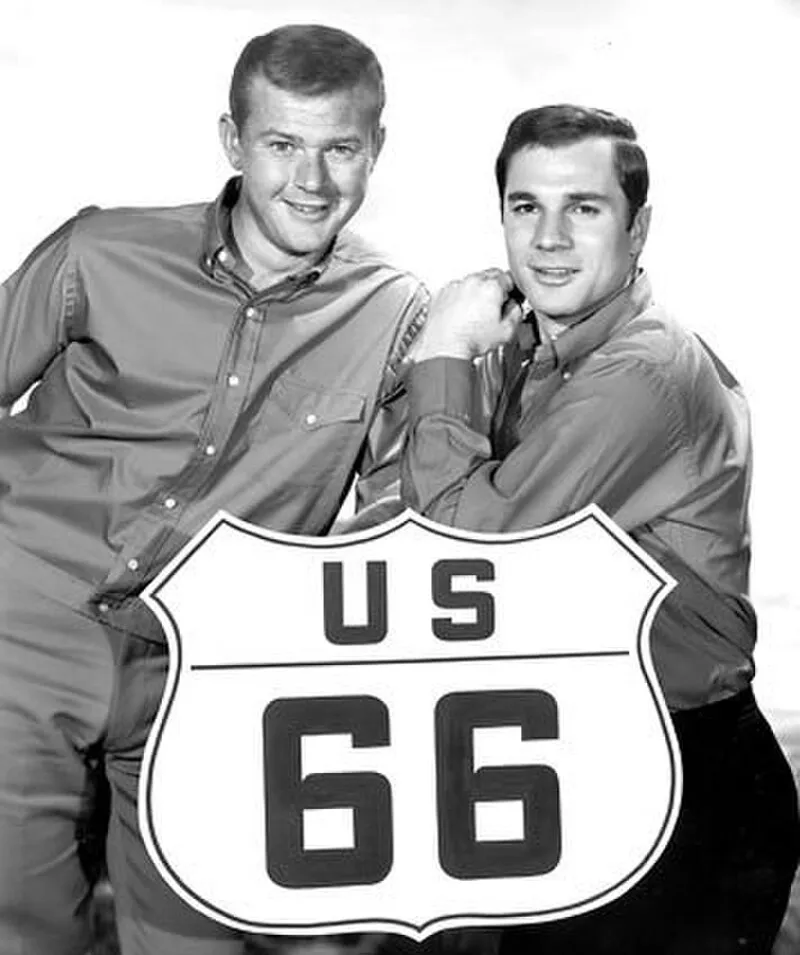 Photo of Route 66, via Wikidata/Wikimedia Commons
But strip away the nostalgia for a moment and ask a simple question: how did it start? The car was invented. Fine. But who decided that driving long distances was a reasonable thing to attempt — and what made it possible in the first place?
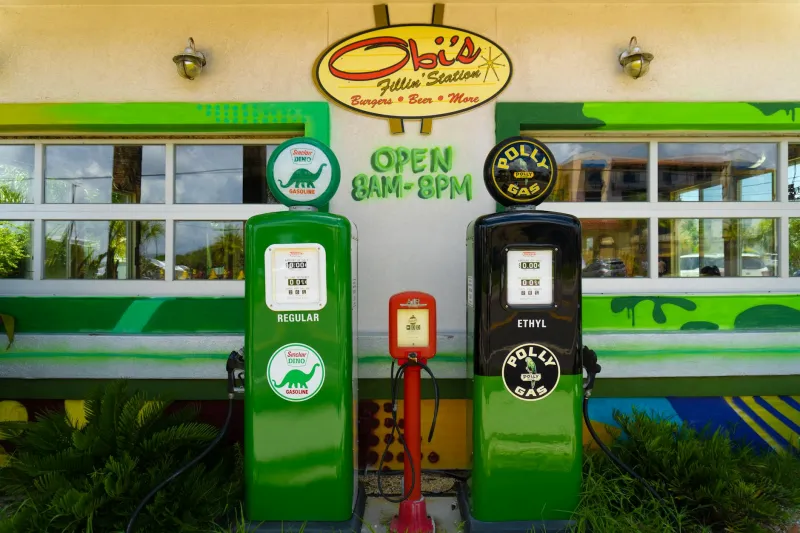
The answer, more than anything else, is a small building on the side of a road with a pump out front. The gas station didn't just enable the road trip. It invented it.
The Gasoline Problem Nobody Talks About
When automobiles began appearing in American cities in the late 1890s and early 1900s, the fueling situation was genuinely chaotic. Gasoline — a byproduct of kerosene refining that had previously been considered a nuisance — was sold in hardware stores, pharmacies, and general goods shops in small quantities, usually in cans. If you ran out on the road, you found the nearest general store and hoped they had some. If they didn't, you pushed.
For short city trips, this was manageable. For anything longer, it was a serious obstacle. Early automobile enthusiasts — and they were enthusiasts, not ordinary travelers — would sometimes carry spare fuel cans in their vehicles, plan routes around known fuel sources, or simply accept that their journey might end prematurely in a ditch somewhere outside town.
The first purpose-built filling station in the United States is generally credited to a Standard Oil outlet that opened in Seattle, Washington, in 1907. It offered gasoline from a garden hose connected to a tank — not exactly the gleaming forecourt experience of later decades, but a dedicated stop where a driver could reliably fuel up. The concept spread quickly. By 1910, there were several hundred. By 1920, there were tens of thousands.
More Than Fuel — A Permission Slip to Go
Here's what the history books tend to underemphasize: the gas station didn't just solve a logistics problem. It changed the psychological relationship between Americans and distance.
Before reliable fueling infrastructure existed, driving beyond your immediate region required a level of planning, mechanical knowledge, and risk tolerance that kept most people close to home. The car was a novelty, not a vehicle for exploration. But as filling stations began appearing every few miles along major routes — often operated by farmers or local merchants who'd struck deals with oil companies — the calculus changed. The open road stopped being a gamble.
This shift happened in tandem with other infrastructure developments. Road surfaces improved as state and federal governments began investing in paved highways. The Lincoln Highway, established in 1913 as the first coast-to-coast road route, was actively promoted by the Good Roads movement, which understood that roads without services were useless. Gas stations, roadside diners, and motor courts (the forerunners of motels) began clustering along these routes, each one making the next stretch of road a little less daunting.
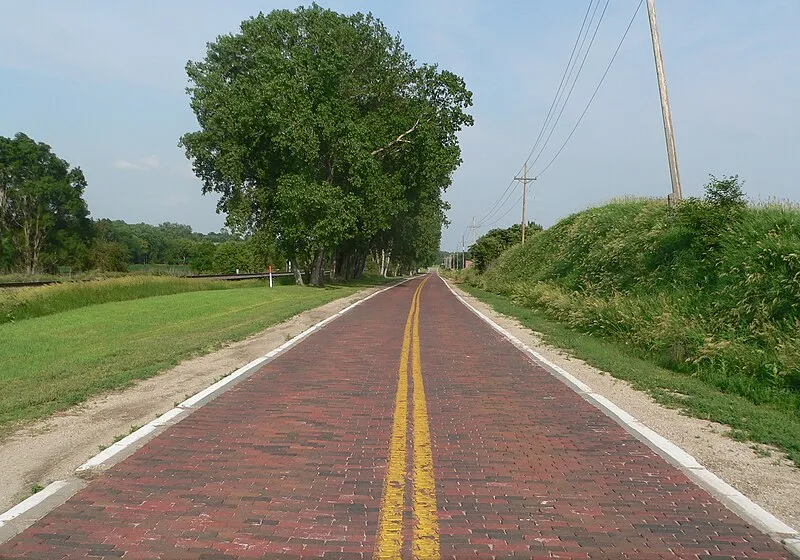 Photo of Lincoln Highway, via Wikidata/Wikimedia Commons
By the 1920s, something new was happening in America: ordinary middle-class families were taking driving vacations. Not wealthy adventurers — families. They packed their Fords and their Chevrolets and drove to national parks, to relatives in distant states, to the beach. The road trip had become a leisure activity, and it had become one because the infrastructure made it survivable.
The Gas Station as Cultural Landmark
It's worth pausing on how central the gas station became to American roadside culture beyond just fuel. By the 1930s and 1940s, filling stations had evolved into elaborate architectural statements. Oil companies competed fiercely on branding and design — Shell's scallop logo, the Pegasus of Mobil, the distinctive white towers of Standard Oil stations. Stopping for gas became a small social ritual: an attendant washed your windshield, checked your oil, maybe chatted about road conditions ahead.
The gas station was, for millions of Americans, the first point of contact with an unfamiliar place. It was where you asked for directions, learned what the next town was like, and got a sense of whether the road ahead was worth taking. In that sense, it functioned as a kind of distributed welcome center — a node in a network that made the country feel navigable.
The interstate highway system, launched under President Eisenhower in 1956, scaled everything up dramatically. But the interstates were built for a driving culture that the gas station had already created. Americans were already on the road. The highways just gave them more of it to cover.
What We Inherited Without Knowing It
Today, the gas station is often treated as a purely functional stop — a necessary interruption between destinations. We pull in, tap a card, fill up, and leave. The attendant is long gone; the windshield stays dirty.
But the deeper function hasn't changed. Every time you plot a road trip and feel a small surge of freedom at the thought of it — every time you merge onto a highway with somewhere specific to be and somewhere else to stop along the way — you're living inside a framework that a simple pump and a garden hose helped build more than a century ago.
The American road trip isn't an ancient tradition. It's a relatively recent invention. And it started, like so many things in this country, with someone solving a practical problem and accidentally creating something much larger.