
The Tattoo That Started It All
Walk into any Macy's today and you'll see it everywhere: a simple red star adorning everything from shopping bags to storefront signs. Most shoppers assume it's just corporate branding, but that star tells a much stranger story. It's the permanent reminder of a desperate man's last shot at success—a tattoo from his whaling days that became the symbol of America's retail revolution.
Rowland Hussey Macy didn't set out to change how Americans shop. By 1858, the 36-year-old had already failed spectacularly at five different businesses. His résumé read like a cautionary tale: failed dry goods store in Boston, failed general store in California during the Gold Rush, failed retail ventures scattered across New England. Most people would have given up, but Macy had one advantage over his competitors—he was completely out of conventional ideas.
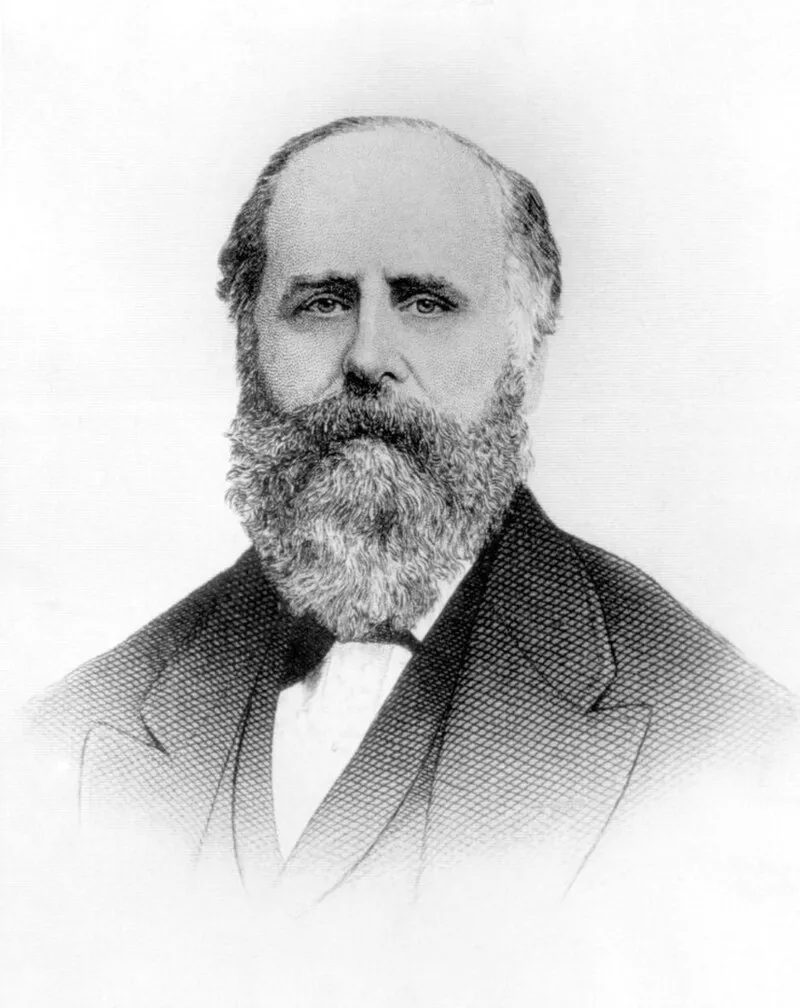 Photo of Rowland Hussey Macy, via Wikidata/Wikimedia Commons
When Desperation Breeds Innovation
In mid-19th century America, shopping was a fragmented affair. Need a hat? Visit the milliner. Want fabric? Find the dry goods merchant. Looking for shoes? Track down the cobbler. Each craftsman specialized in their trade, and customers spent entire days bouncing between shops just to complete basic household needs.
Macy's breakthrough wasn't born from genius—it was born from necessity. With creditors breathing down his neck and his reputation in tatters, he couldn't afford to compete with established specialists. So on October 28, 1858, he opened a store at 204 Sixth Avenue in Manhattan with a radical proposition: everything under one roof.
 Photo of Manhattan, via Wikidata/Wikimedia Commons
The concept was so foreign that early customers didn't know what to call it. Macy simply advertised "fancy dry goods," but his inventory told a different story. Ribbons sat next to kitchen utensils. Handkerchiefs shared shelf space with home decorations. It was retail chaos—and it worked.
The Psychology of One-Stop Shopping
What Macy stumbled upon was something modern marketers spend billions trying to perfect: the power of convenience and impulse buying. When customers came in for one item, they discovered twenty others they didn't know they needed. A woman shopping for gloves might spot a beautiful scarf. A man buying handkerchiefs could find the perfect gift for his wife.
But Macy's real innovation wasn't just variety—it was experience. While traditional merchants treated customers with suspicion, demanding payment upfront and offering no guarantees, Macy introduced revolutionary policies that seem obvious today but were scandalous in 1858.
He offered the first "money-back guarantee" in American retail history. Customers could return items, no questions asked—a practice so unheard of that competitors called it financial suicide. He marked prices clearly on every item, ending the exhausting practice of haggling over every purchase. Most shocking of all, he advertised these policies in newspapers, something respectable merchants considered beneath their dignity.
The Star That Conquered America
That red star tattoo from Macy's whaling days became his store's symbol almost by accident. When designing his first advertisements, he needed something distinctive to set his store apart. The star on his hand—a reminder of his time aboard the whaling ship Emily Morgan—became the logo that would eventually appear on storefronts from coast to coast.
Within a decade, Macy's annual sales hit $1 million, making it the largest store in America. But more importantly, Macy had accidentally created a template that would reshape American commerce. Competitors rushed to copy his model, leading to the birth of department store giants like Marshall Field's, Jordan Marsh, and eventually, the entire modern retail industry.
The Ripple Effect That Changed Everything
Macy's success didn't just change retail—it transformed American cities. Department stores became anchor tenants that drew foot traffic to entire districts. They created the first dedicated shopping areas, changed how people dressed (suddenly everyone could afford to look fashionable), and even influenced architecture as builders designed spaces specifically for retail display.
The department store model also democratized luxury. Items that were once available only to the wealthy through exclusive craftsmen became accessible to the growing middle class. A secretary could buy the same perfume as a socialite, just in a smaller bottle.
From Failure to Forever
Rowland Macy died in 1877, but his accidental revolution lived on. The store he built out of desperation became Macy's Inc., which today operates over 500 locations and generates billions in annual revenue. That red star still adorns every store, a permanent reminder that sometimes the biggest innovations come from people who have nothing left to lose.
The next time you walk through a mall or browse multiple departments in a single store, remember the tattooed whaler who changed everything. Macy didn't set out to revolutionize American shopping—he just needed to pay his bills. Sometimes the most transformative ideas come not from visionaries, but from desperate people willing to try something nobody else thought would work.
In a country built on second chances, Rowland Macy's sixth attempt at business didn't just succeed—it created the template for how Americans would shop for the next 150 years and counting.