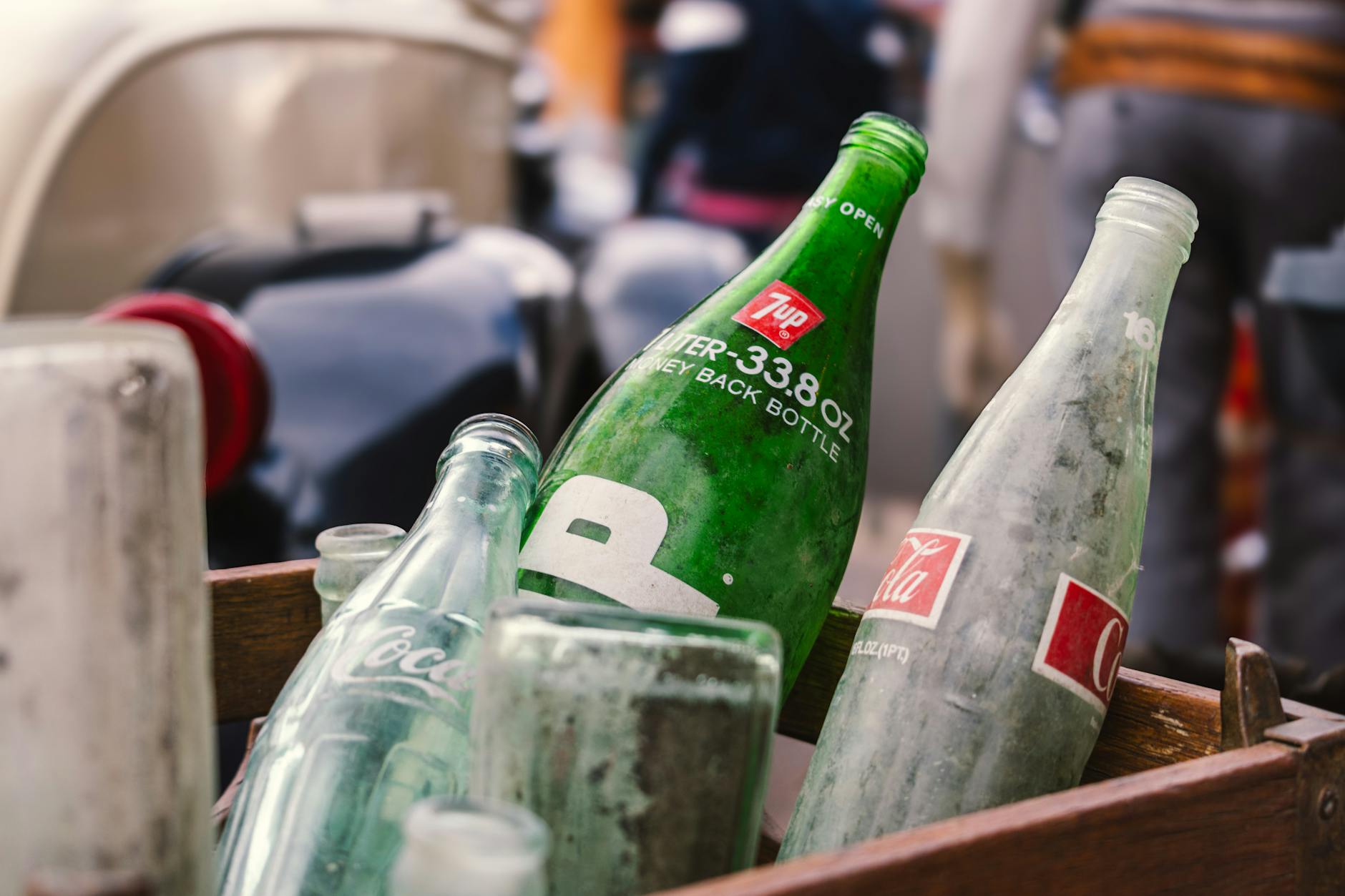
There is a product so familiar, so woven into the fabric of American life, that it almost stops being a thing and becomes more like a background condition. You've seen the logo on every continent. You've heard the jingle in every decade. You've ordered it so many times that the words come out automatically.
But Coca-Cola didn't start as a corporate juggernaut. It started as one man's very personal attempt to fix himself — brewed in a backyard in Atlanta by someone who was hurting in ways he couldn't quite shake.
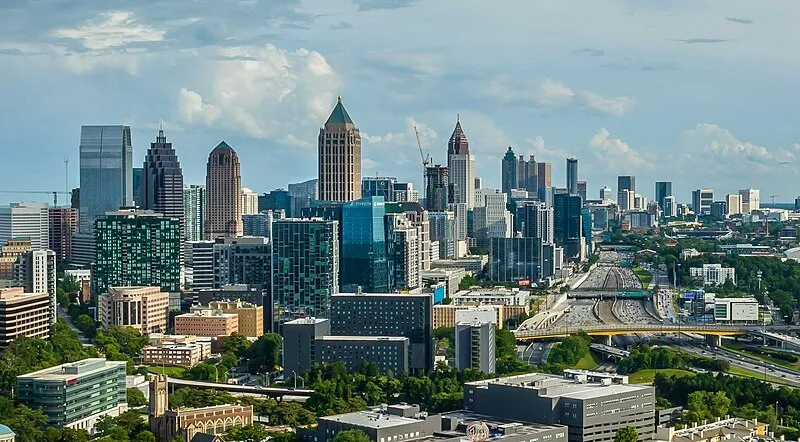 Photo of Atlanta, via Wikidata/Wikimedia Commons
The Man Behind the Syrup
John Stith Pemberton was a Confederate Army lieutenant colonel who came home from the Civil War with a saber wound to the chest and a morphine addiction he'd developed while recovering from it. He was a pharmacist by training, which meant he understood chemistry — but it also meant he had easy access to the substances he'd come to depend on.
Pemberton spent years trying to find a substitute that could quiet the cravings without the consequences. He was drawn to two ingredients that were generating enormous buzz in the medical community of the 1880s: coca leaves, which contain cocaine, and kola nuts, which contain caffeine. Both were being celebrated at the time as wonder substances — energizing, medicinal, mood-lifting.
He combined them with other ingredients into an early concoction he called Pemberton's French Wine Coca. It was, in essence, a patent medicine — the kind of cure-all product that crowded pharmacy shelves in the 19th century, often with ingredients that would make a modern doctor wince. He sold it as a remedy for headaches, exhaustion, morphine addiction, and a variety of nervous complaints.
For a time, it worked. Or at least it sold.
Prohibition Changes Everything
In 1886, Atlanta passed local prohibition legislation, which created a problem for Pemberton. His French Wine Coca was, as the name suggested, wine-based. He needed to reformulate.
He went back to his backyard and his cast-iron kettle and started experimenting. He removed the alcohol and adjusted the syrup's base, mixing in sugar, caramel coloring, and a blend of oils and extracts that he kept deliberately vague. The exact formula was a trade secret from the beginning.
The new syrup was meant to be mixed with plain water at the pharmacy counter. But at some point — and accounts vary on exactly how it happened — carbonated water got mixed in instead. Whether it was a customer's request, a soda fountain error, or a deliberate experiment, the result was transformative. The carbonation gave the syrup a lift, a brightness, a drinkability that plain water simply didn't.
Pemberton tasted it and recognized he had something. He named it Coca-Cola, a nod to its two main active ingredients, and began selling it at Jacob's Pharmacy in Atlanta for five cents a glass.
The Wildest Health Claims You've Ever Heard
Early Coca-Cola marketing was something to behold. The drink was positioned not as a refreshment but as a medicine — a "brain tonic" and "intellectual beverage" that could cure headaches, relieve exhaustion, and calm the nerves. One early advertisement described it as a remedy for morphine addiction, which was a claim Pemberton understood personally, even if the science behind it was dubious at best.
Coca-Cola contained a small but real amount of cocaine derived from coca leaves until around 1903, when the company began using decocainized leaf extract instead. By then, public concern about cocaine had grown significantly, and the reformulation was a quiet but important shift. The drink's stimulating qualities from that point came from caffeine alone — but the marketing language of health and vitality stuck around long after the original ingredients changed.
In those early years, Pemberton sold about nine glasses a day. It was a local curiosity, not a phenomenon. He was also sick, struggling financially, and increasingly pessimistic about his creation's future.
The Businessman Who Saw the Bigger Picture
Asa Griggs Candler was an Atlanta businessman who had been watching Coca-Cola's modest early run with interest. In 1888, he began buying up shares of the formula from Pemberton, who was desperate for cash and fading in health. By 1891, Candler had acquired full ownership of the Coca-Cola formula for a total of around $2,300 — one of the most lopsided deals in American commercial history.
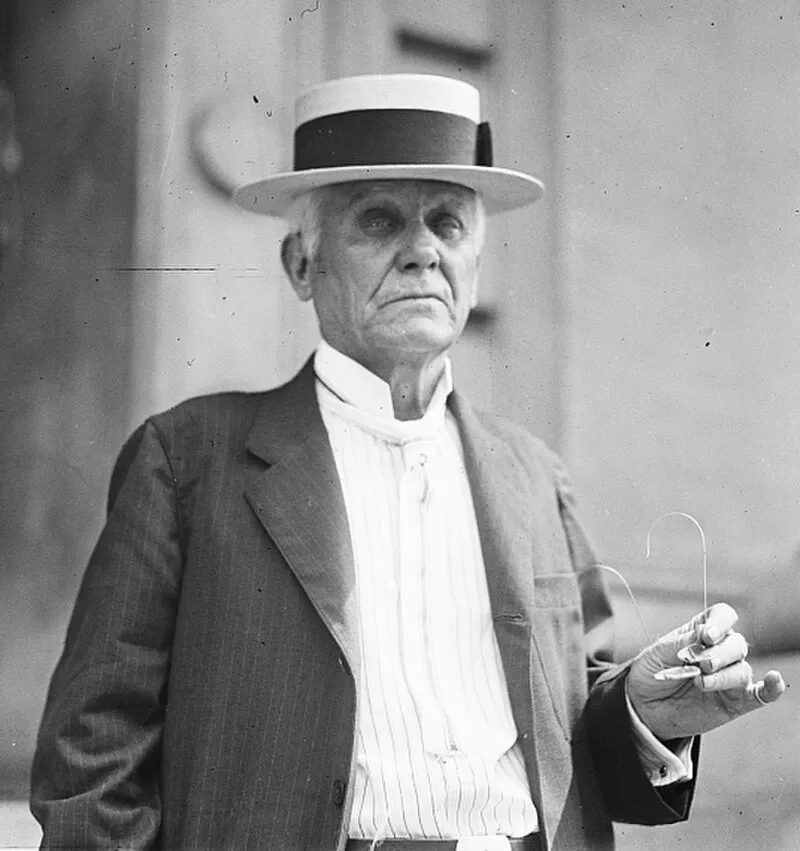 Photo of Asa Griggs Candler, via Wikidata/Wikimedia Commons
Pemberton died in 1888, largely broke, never seeing what his invention would become.
Candler saw it clearly. He immediately understood that Coca-Cola's future wasn't in pharmacies — it was in scale. He invested aggressively in advertising, distributing free coupons for complimentary glasses of Coke to introduce the drink to new customers. He pushed the syrup to soda fountains across the country and created a national sales force to spread the brand.
By 1895, Coca-Cola was being sold in every state in the union. By 1906, it had crossed into Cuba and Panama. The global expansion had begun.
In 1899, two lawyers from Chattanooga convinced Candler to sell them the rights to bottle Coca-Cola for a price he apparently considered a joke: one dollar. He signed the contract. He never collected the dollar. The bottling rights turned out to be worth incalculably more than the syrup sales Candler had been focused on — and the bottling network those lawyers built became the foundation of Coca-Cola's worldwide reach.
One Man's Pain, the World's Drink
There is something quietly extraordinary about the Coca-Cola origin story. A man in genuine distress — wounded, addicted, financially unstable — cooked up a syrup in his backyard hoping to find some relief. He wasn't thinking about brand identity or global markets. He was thinking about his headache and his habit.
The drink he made went on to become the most recognized commercial product in human history. Its logo is identifiable in countries where people can't read the English lettering. Its formula remains one of the most closely guarded trade secrets in the world. And the red-and-white can sitting in your refrigerator right now traces a direct line back to that cast-iron kettle in Atlanta.
John Pemberton never got rich from it. He never got famous from it. He barely got to see it work.
But every time someone cracks open a cold Coke — at a ballgame, at a cookout, at a counter somewhere in the middle of America — his backyard experiment is still in the room.