The Dentist Who Hated Hard Candy
Dr. William Morrison had a problem in his Cincinnati dental practice in 1897. His patients kept arriving with teeth damaged from the rock-hard penny candies sold on every street corner. Peppermint sticks, horehound drops, and molasses taffy were destroying the dental work he'd spent hours perfecting.
Morrison decided to create a softer alternative. Working in his kitchen after office hours, he began experimenting with sugar solutions, trying to find a way to make candy that wouldn't crack teeth. His goal was simple: create something sweet that dissolved quickly in the mouth instead of requiring aggressive chewing.
The Machine That Changed Everything
Morrison's breakthrough came when he partnered with confectioner John Wharton to build a mechanical cotton candy machine. Their contraption used centrifugal force to spin heated sugar through tiny holes, creating delicate threads that cooled into edible floss.
The machine worked, but Morrison quickly realized he'd solved the wrong problem. Cotton candy was indeed soft, but it was also expensive to produce, difficult to package, and impossible to store. His dental patients appreciated the gentleness, but the economics made no sense for mass production.
Then Morrison made a connection that would reshape American snacking forever.
The Popcorn Revelation
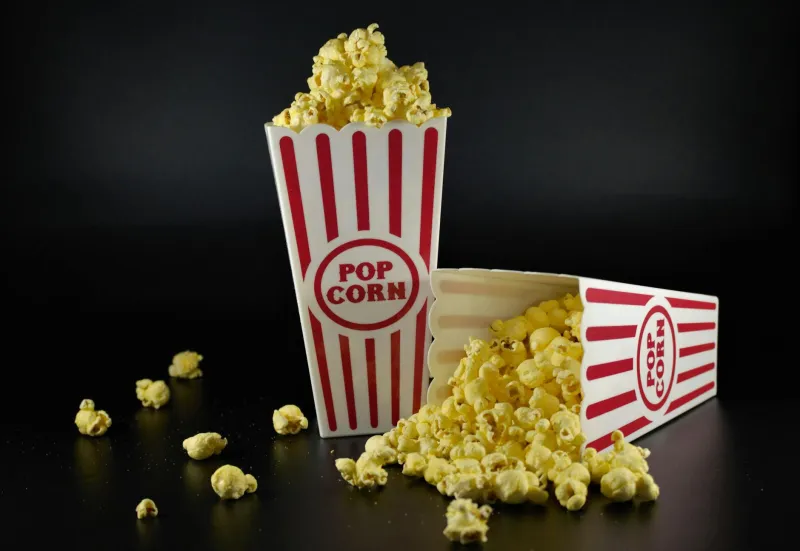
During his sugar experiments, Morrison noticed something interesting about the corn kernels he kept in his kitchen. When exposed to high heat—similar to what his cotton candy machine generated—the kernels transformed into light, airy puffs that were naturally soft and easy to chew.
Popcorn wasn't new. Native Americans had been popping corn for centuries, and street vendors sold it as a novelty snack. But Morrison realized that popcorn possessed the exact qualities he'd been trying to engineer into candy: it was soft enough for sensitive teeth, dissolved easily, and created minimal dental stress.
More importantly, popcorn was incredibly cheap to produce and could be made fresh on demand.
The World's Fair Experiment
Morrison's timing was perfect. The 1893 World's Columbian Exposition in Chicago was approaching, and vendors were scrambling to find foods that could feed massive crowds quickly and profitably. Morrison saw an opportunity to test his popcorn theory on an unprecedented scale.
He developed a mobile popping machine that could produce fresh popcorn continuously, filling the air with an irresistible aroma. Unlike other fair foods that required elaborate preparation, popcorn could be made instantly as customers waited.
The World's Fair proved Morrison's instincts correct. His popcorn stand generated enormous crowds, not just because of the taste, but because of the sensory experience. The popping sounds, the smell, and the visual spectacle of kernels exploding into fluffy white puffs created entertainment value beyond the actual eating.
The Accidental Entertainment Snack
What Morrison couldn't have predicted was how popcorn's characteristics would make it perfect for a new form of entertainment emerging across America: motion pictures.
Early movie theaters faced a unique challenge. They needed snacks that wouldn't distract from the viewing experience—no loud crunching, no strong odors, no sticky fingers that would damage seats. Popcorn solved all these problems while providing theater owners with enormous profit margins.
A bag of popcorn that cost theaters three cents to produce could be sold for ten or fifteen cents. More importantly, the smell of popping corn drew customers into theaters and created positive associations with the movie-going experience.
The Great Depression's Unlikely Hero
Popcorn's true dominance came during the Great Depression, when its economics became irresistible for both sellers and buyers. While other snack foods became luxury items, popcorn remained affordable for struggling families.
Movie theaters discovered that popcorn sales often determined their survival. A theater might break even on ticket sales but generate all its profit from concessions. Popcorn, with its incredible markup and universal appeal, became the financial foundation of the American cinema industry.
The symbiotic relationship between popcorn and movies grew so strong that theaters began designing their lobbies around popcorn machines, using the aroma and sound as marketing tools to enhance the entertainment experience.
The Science Behind the Success
Morrison's accidental discovery tapped into several psychological and physiological factors that made popcorn irresistible. The popping process creates a unique texture that's simultaneously crispy and light, providing satisfying crunch without jaw fatigue.
The irregular shapes of popped kernels create varied textures in each bite, preventing the sensory boredom that makes people stop eating other snacks. The relatively neutral flavor serves as a perfect canvas for salt, butter, and other seasonings.
Most importantly, popcorn's high volume-to-calorie ratio creates the illusion of eating large quantities while consuming relatively few calories, satisfying both psychological and physical hunger cues.
The Industrial Revolution
By the 1920s, Morrison's kitchen experiment had spawned an entire industry. Companies like Cracker Jack (introduced in 1896) proved that popcorn could be mass-produced, packaged, and distributed nationally. Movie theater chains standardized popcorn preparation, creating consistent experiences across thousands of locations.
The development of better corn varieties, specialized oils, and flavoring systems turned popcorn from a simple snack into a sophisticated food product. Yet the basic appeal Morrison discovered—affordable, soft, aromatic, and instantly satisfying—remained unchanged.
The Modern Popcorn Economy
Today, Americans consume over one billion pounds of popcorn annually, generating more than $1 billion in retail sales. Movie theaters still depend on popcorn for profitability, with concession sales often accounting for 40% of total revenue.
The snack that Morrison accidentally perfected while trying to protect his patients' teeth has become embedded in American culture. From microwave bags to gourmet varieties, popcorn represents the democratization of entertainment snacking—accessible, affordable, and universally appealing.
The Unintended Legacy
Morrison never solved his original problem—patients continued damaging their teeth on hard candy. But his kitchen experiments created something far more significant: the template for modern entertainment snacking.
Popcorn proved that the best snack foods aren't just about nutrition or flavor—they're about experience. The sight, sound, and smell of popping corn became as important as the taste, creating a multi-sensory product that enhanced rather than competed with entertainment.
From a Cincinnati dentist's frustration with damaged teeth to a multi-billion-dollar industry that defines American leisure culture, popcorn's journey illustrates how the most transformative innovations often emerge from attempts to solve completely different problems. Morrison wanted to save teeth; instead, he created the snack that would make movies profitable and give America its most enduring food tradition.