Picture it: 1957, a garage in Hawthorne, New Jersey. Two engineers — Alfred Fielding and Marc Chavannes — are convinced they've cracked the next big thing in home décor. Their idea? A textured, three-dimensional wallpaper that would bring a fresh, modern feel to American living rooms. They sealed two shower curtains together, trapping air bubbles between the layers, and stood back to admire their creation.
The wallpaper idea went nowhere. But the material they made? That went absolutely everywhere.
A Solution Without a Problem
Fielding and Chavannes weren't ready to give up on their accidental creation. If textured wallpaper wasn't the answer, maybe the material had another calling. They pivoted and tried marketing it as greenhouse insulation — the air pockets, they reasoned, could help regulate temperature for plants. That idea also fizzled.
For a few years, their invention sat in an awkward middle ground: clearly interesting, clearly useful in some way, but without an obvious home. They had founded a company, Sealed Air Corporation, and filed a patent in 1960, but the product still hadn't found its purpose.
Then came IBM.
The Computer That Saved the Bubble
In 1961, IBM was preparing to ship its brand-new 1401 computer — a machine that was, by the standards of the day, a genuinely fragile and expensive piece of technology. The company needed packaging that could absorb shock and protect the hardware during transit. Standard materials weren't cutting it.
Sealed Air pitched their bubble material as the solution. IBM said yes, and just like that, Bubble Wrap had its first real customer — and its real identity. It wasn't a wall covering or a greenhouse liner. It was a protective packaging material, and it was perfect at it.
Word spread quickly through the shipping and manufacturing world. If it was good enough to protect an IBM computer, it was good enough to protect just about anything. Orders started coming in. Sealed Air scaled up production. By the mid-1960s, Bubble Wrap was becoming a staple in warehouses and mailrooms across the country.
From Shipping Rooms to Living Rooms
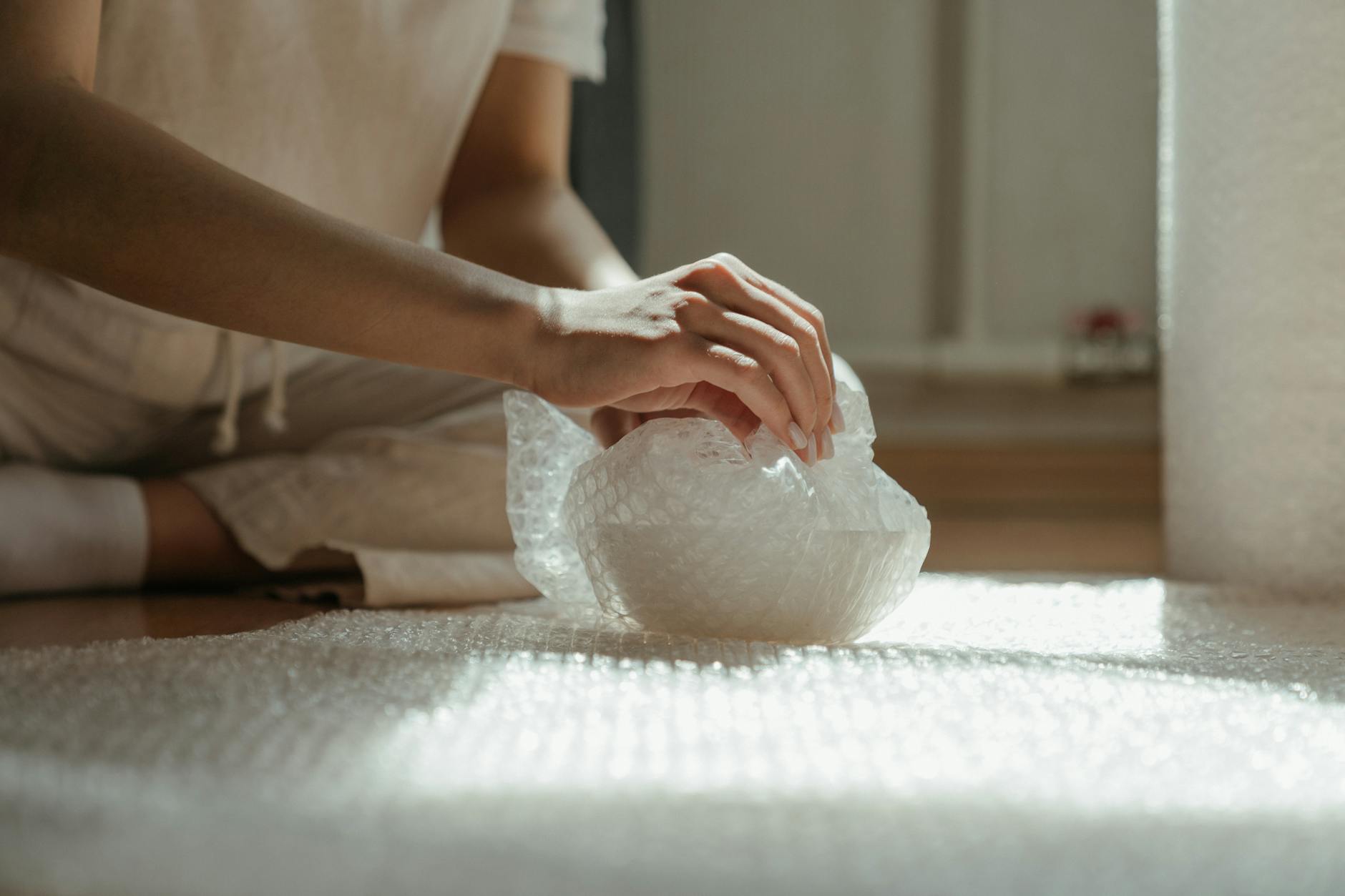
Here's the thing about Bubble Wrap that no one really planned for: people loved touching it. Not because it protected their packages, but because of what happened when they pressed down on those little air pockets.
Pop.
There's something deeply, almost irrationally satisfying about that sound and sensation. It didn't take long for Bubble Wrap to escape the shipping room and start showing up in people's hands — on break at the office, in the backseat on long drives, on the kitchen counter after a package arrived. Popping Bubble Wrap became one of those small, mindless pleasures that Americans quietly adopted into daily life.
Scientists eventually took notice. Research published in the early 2000s suggested that popping Bubble Wrap may actually reduce stress and tension. One study found that people who popped the material reported feeling more alert and less anxious afterward. The repetitive motion, the predictable reward of the pop — it hits something in the brain that's hard to explain but easy to feel.
Sealed Air even leaned into the phenomenon, releasing a virtual Bubble Wrap app and designating the last Monday of January as "Bubble Wrap Appreciation Day." Yes, that's a real thing.
A Billion-Dollar Accident
Today, Sealed Air Corporation is a multi-billion-dollar company, and Bubble Wrap remains one of its signature products. Millions of pounds of it are produced every year. It ships electronics, protects artwork, cushions furniture, and lines the inside of countless boxes that land on American doorsteps every single day — especially as e-commerce has sent demand for protective packaging through the roof.
In 2015, the company introduced a new flat version called iBubble Wrap, which ships uninflated and gets puffed up at the warehouse — a more efficient design for the modern supply chain. Predictably, the internet was briefly outraged that the new version couldn't be popped in the traditional way. The backlash said everything about how attached people had become to the original experience.
The Wallpaper That Wasn't
What makes the Bubble Wrap story so satisfying — almost as satisfying as the pop itself — is how completely it defied its creators' original intentions. Fielding and Chavannes weren't trying to revolutionize packaging. They weren't trying to create a stress-relief tool or a childhood entertainment staple. They were trying to make a cool-looking wall covering.
They failed at that completely. And in doing so, they accidentally gave the world something it didn't know it needed.
Next time a package shows up at your door and you find yourself peeling back that sheet of bubbles before you've even looked at what you ordered — you've got a couple of New Jersey engineers and an IBM shipping contract to thank for it.